30-Year Fixed Mortgage Rates: Pros, Cons & Trends You Must Know
30-year fixed mortgage rates remain popular due to stable payments, but they often come with higher interest costs over time. Understanding current trends and trade-offs helps you choose the right loan strategy.

30-year fixed mortgage rates are one of the most important financial variables for homeowners, whether you’re buying, refinancing or planning long-term.
Because the rate stays the same throughout the life of the loan, it provides payment predictability that many families rely on.
However, the longer term also means paying more interest over time.
Understanding the pros, cons, and current trends of 30-year fixed mortgage rates helps homeowners decide whether this loan structure fits their goals or whether alternative refinance or mortgage options might be better.
What 30-Year Fixed Mortgage Rates Mean
A 30-year fixed mortgage rate is the interest rate that applies to your home loan for the full 30-year term.
Unlike adjustable rate mortgages (ARM), this rate never changes, even if market rates rise or fall.
This stability allows homeowners to plan long-term budgeting with confidence.
When comparing 30-year fixed rates, it’s useful to contrast them with other structures and trends to determine whether the predictability is worth the cost.
Advantages of 30-Year Fixed Mortgage Rates
The biggest advantage of a 30-year fixed rate is predictability: your interest rate and monthly principal and interest payment stay the same for the full loan term.
This makes budgeting easier and reduces risk from rising interest rates. It’s particularly helpful for first-time buyers and families with tight monthly cash flow.
Many homeowners look at current refinance rates to see whether locking into a stable rate now makes sense for long-term security.
Disadvantages of 30-Year Fixed Mortgage Rates
The main trade-off with a 30-year fixed rate is total interest paid. Because the loan is stretched over 30 years, you pay more interest over time than with shorter-term mortgages.
These higher lifetime costs can erode long-term equity gains, especially if you plan to stay in the home for a shorter period.
When comparing refinance and mortgage options, the term length matters as much as the headline rate.
Trends in 30-Year Fixed Mortgage Rates
30-year fixed mortgage rates move with broader economic indicators, including Treasury yields, inflation expectations, and Federal Reserve policy.
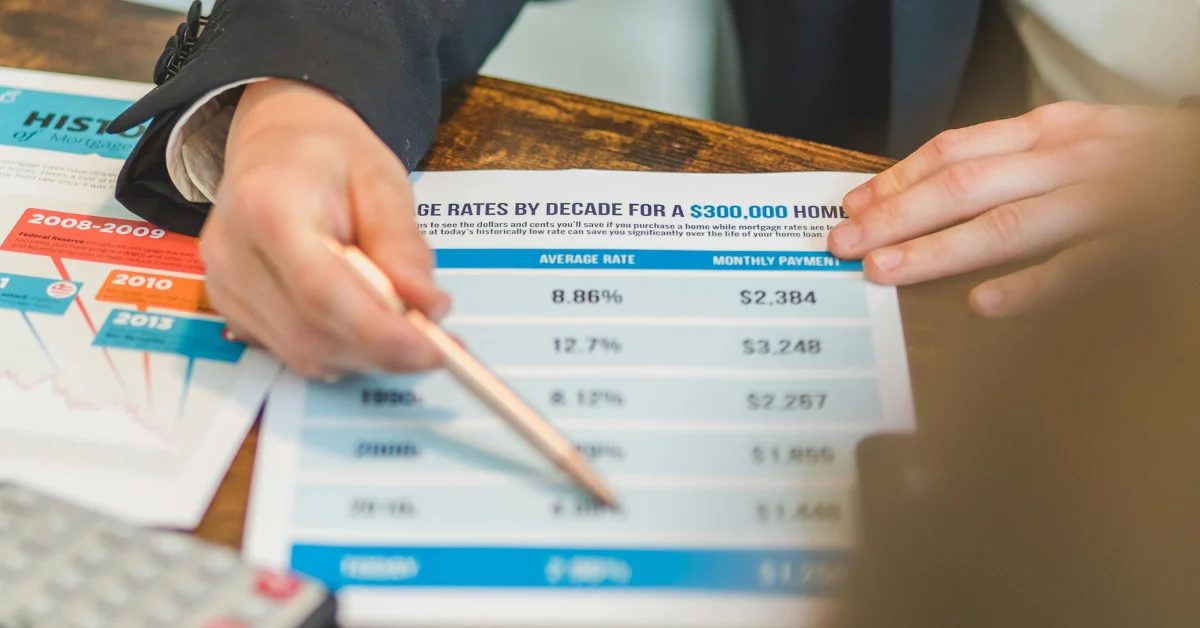
Over the past several years, rates have fluctuated widely in response to economic cycles, which is why comparing 30-year mortgage refinance rates explained helps homeowners understand current pricing in context rather than as a static number.
Looking at trends over time rather than a single snapshot gives a clearer picture of where rates may be headed.
How Credit Profile Affects Your 30-Year Fixed Rate
Your credit score, income stability, debt-to-income ratio, and home equity all influence the rate you’ll qualify for.
Even when national averages show lower rates, your personal refinance or purchase rate may differ.
Understanding what lenders look at for refinance approval helps set realistic expectations and improves your chance of qualifying for competitive pricing.
30-Year Fixed vs Other Mortgage Options
Compared with 15-year mortgages, 30-year fixed rates are typically slightly higher, but monthly payments are significantly lower because of the extended term.
Adjustable rate mortgages (ARM) may start with lower rates, but they carry future uncertainty.
When evaluating which structure fits your goals, it helps to explore mortgage refinance options including rate-and-term, cash-out, and adjustable rate options.
When 30-Year Fixed Rates Make Sense
30-year fixed mortgage rates are most beneficial when you want payment stability, plan to stay in the home long term, or prefer predictable budgeting over potential short-term savings.
They are especially helpful for first-time buyers and homeowners who value consistency over rate speculation.
Checking trends in current refinance rates enables you to evaluate whether now is a good time to lock in for the long haul.
When 30-Year Fixed Rates Might Not Be Ideal
If your financial plan emphasizes paying off the mortgage faster or minimizing total interest costs, shorter-term loans like 15-year fixed mortgages might be better.
Likewise, if you expect to move or refinance in the near future, locking into a slightly higher 30-year rate may not be worth it.
Understanding your timeline and comparing refinance and purchase options helps clarify whether the 30-year fixed rate supports your goals.
How to Shop for the Best 30-Year Fixed Refinance Rates
To find competitive 30-year fixed refinance rates, you should:
- Improve or optimize your credit score
- Build home equity before applying
- Shop quotes from multiple lenders
- Compare APR, not just the headline rate
Comparing mortgage refinance rates in this structured way helps you identify the true lowest cost option, not just the lowest advertised number.
Conclusion
30-year fixed mortgage rates offer the comfort of a stable monthly payment and protection from rising rates, making them attractive for many homeowners.
However, the trade-off is higher total interest over the life of the loan. Whether these rates are right for you depends on your financial goals, timeline in the home, and overall budget.
When evaluated alongside refinance costs, rate trends, and eligibility, you can make a more informed decision that supports both short-term cash flow and long-term financial health.
Mortgage Calculator
Recommended Mortgage Tools
Refinance Break-Even Calculator
See how long it takes to recover refinance costs.
Debt-to-Income Ratio Calculator
Check if your income supports mortgage approval.
Refinance Readiness Checker
Find out if now is the right time to refinance.
Mortgage Eligibility Checker
Quickly see if you qualify for a home loan.
First-Time Buyer Readiness
Know if you're ready to buy your first home.
Mortgage Pre-Approval Calculator
Estimate how much you can borrow instantly.
Next Read
Featured Mortgage Insights
Many families are delaying home loan decisions as rising housing costs, mortgage rate uncertainty, and long-term financial commitments create hesitation. Buyers are taking more time to evaluate affordability, savings stability, and future financial risks before committing to homeownership.

Featured Mortgage Insights
Mortgage rates may appear stable, but buyer behavior continues to evolve as affordability concerns and long-term financial planning influence homeownership decisions. Buyers are reassessing budgets, loan choices, and purchase timing despite consistent borrowing conditions.
Featured Mortgage Insights
Mortgage payments often feel like they should stay the same forever, especially if you have a fixed-rate loan. But..



About the Author: Ratiranjan Singha

Don’t Miss These