First-Time Home Buyer Readiness Checker: Are You Ready?
Buying a house for the first time is exciting, but it can also feel confusing because nobody clearly explains what “ready” actually means...
Buying a house for the first time is exciting, but it can also feel confusing because nobody clearly explains what “ready” actually means.
Many first-time home buyers focus only on home prices and mortgage rates, but lenders look at a bigger picture.
Your credit score, debt-to-income ratio, employment stability, and savings all affect whether you qualify for a first time buyer mortgage and what interest rate you may receive.
This First-Time Home Buyer Readiness Score tool helps you estimate your current mortgage readiness before applying. Instead of guessing, you’ll get a score and clear next steps based on common mortgage approval factors.
Whether you are planning to buy, this tool helps you understand mortgage options for first time buyers and prepares you for the home buying process before you request lender quotes.
How the First-Time Home Buyer Readiness Score Works?
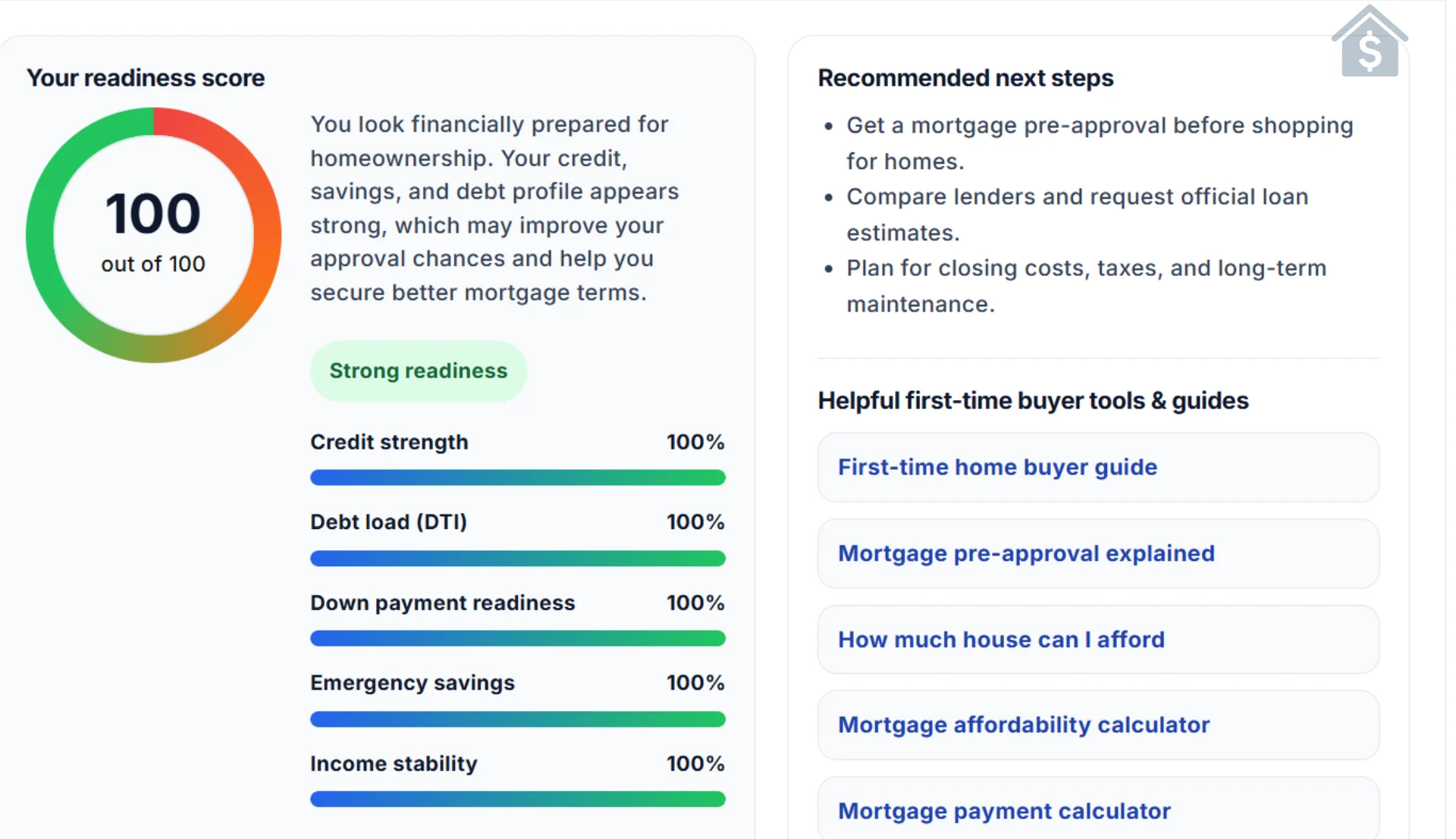
This tool works by scoring the key financial factors lenders typically evaluate when reviewing a first time home loan application. It focuses on your credit score range, debt-to-income ratio (DTI), down payment strength, emergency savings, and employment stability.
Each of these factors impacts whether you may qualify for a first time buyer mortgage and how affordable your monthly payment will be long-term.
Many people buying a house for the first time only look at the listing price and forget the lender side of the equation.
This readiness score helps you quickly understand if you are financially prepared or if you should take a few months to strengthen your profile before applying.
If you want a complete roadmap for buying your first home, the First-Time Home Buyer Guide explains each step clearly, from budgeting to closing day.
Many first-time buyers qualify for a mortgage but still struggle with the real monthly cost of homeownership. Your mortgage payment is only part of the picture - property taxes, insurance, PMI, maintenance, and closing costs can add up fast. Before making an offer, make sure your monthly payment feels comfortable even in a worst-case scenario.
What Lenders Look for Before Approving a First-Time Buyer Mortgage?
Most first-time home buyers assume income is the main approval factor, but lenders focus heavily on risk and consistency. Your credit history shows how responsibly you’ve handled borrowing, while your debt-to-income ratio shows how much monthly debt you already carry.
Even with good income, high debt can reduce your approval chances or limit your home price range.
Lenders also review down payment readiness because it affects loan-to-value ratio, mortgage insurance costs, and the strength of your overall application.
Employment stability matters too, especially if you are self-employed or have recently changed jobs.
That’s why this tool is not just a “yes or no” answer, it’s a snapshot of how strong your profile looks compared to common first time home buyer eligibility requirements.
If you want to understand the most common approval problems, reading why first-time buyers get denied for mortgages can help you avoid costly mistakes.
Why Down Payment and Emergency Savings Matter More Than You Think?
A down payment is important, but emergency savings is the part many first-time buyers overlook. Some people save just enough for the down payment and closing costs, then move in with almost nothing left.
That’s risky because homeownership comes with unexpected repairs, insurance changes, property taxes, and higher utility costs. Lenders often prefer borrowers who have extra cash reserves because it lowers the risk of missed payments.
Even if you qualify through first time home buyer programs, having savings after closing makes homeownership safer.
If you want to estimate how much you should put down, using a down payment calculator is a strong starting point. But it should be paired with affordability planning so you don’t stretch your budget too far.
For a realistic breakdown of extra expenses, the guide on hidden home buying costs explains the costs of buying a house that most buyers don’t budget for.
Credit Score and Debt-to-Income Ratio: The Two Biggest Approval Factors
If there’s one thing that influences your mortgage approval outcome more than anything else, it’s your credit score and debt-to-income ratio.
Your credit score impacts the mortgage interest rate you qualify for, and even a small difference can change your payment significantly. Your DTI ratio is equally important because it shows lenders how much financial pressure you already have.
If your DTI is too high, lenders may approve you for less than expected or reject the application entirely. This is why buyers should check these numbers before requesting bank pre approval or submitting applications.
If you want to estimate your debt properly, the debt-to-income ratio calculator is one of the most useful tools you can use before applying.
If you’re unsure what credit score range is needed, the guide what credit score do I need to buy explains it clearly for first time home buyers.
What to Do After You Get Your Readiness Score?
Your readiness score should guide your next move, not just give you a number. If your score is strong, your next step should be getting a first time home buyer pre approval so you can shop confidently and negotiate with sellers.
If your score is moderate, improving credit score or building stronger savings can dramatically improve your mortgage options for first time buyers. If your score is low, don’t treat it as failure, treat it as a timeline.
Many buyers improve readiness within 60-180 days by lowering debt, improving credit utilization, and saving consistently.
After scoring, you should calculate affordability so you don’t become “house poor.” Tools like the mortgage affordability calculator and mortgage payment calculator help you estimate a realistic monthly payment.
You can also explore whether renting makes more sense using the rent vs buy calculator. If you want a clear explanation of what lenders expect next, mortgage pre-approval explained is a must-read.
Frequently Asked Questions

Mortgage Quick Tools
About Us
We're MortgageRatesChecker, a trusted mortgage information resource focused on helping consumers navigate home buying, refinancing, mortgage rates, and loan options with confidence. We simplify complex mortgage topics through expert-written guides, calculators, and educational content designed to support informed financial decisions. Explore our mortgage calculators, guides, and resources.
Disclaimer
The information provided on MortgageRatesChecker is for educational and informational purposes only and should not be considered financial, legal, tax, investment, or mortgage advice. While we make every effort to keep our content accurate and current, mortgage rates, loan programs, lending requirements, and financial regulations may change without notice. Users should consult qualified professionals and their mortgage lender regarding their specific financial situation before making any borrowing, refinancing, or home-buying decisions. MortgageRatesChecker is not a lender, broker, financial advisor, or government agency.