Auto Loan Down Payment: How Much Should You Really Pay?
A down payment is one of the most important factors in an auto loan, yet many buyers are unsure how much they should actually pay.
The right amount can reduce your monthly payments, lower interest costs, and improve approval chances, helping you avoid long-term financial stress.
What Is a Down Payment in an Auto Loan?
A down payment is the upfront amount you pay when purchasing a car, reducing the total loan you need to borrow.
For example, if a car costs $30,000 and you pay $5,000 upfront, your loan amount becomes $25,000.
This directly impacts your monthly payments and interest costs. A larger down payment means you borrow less, which lowers your financial burden over time.
If you’re unsure how this affects your loan, using an auto loan calculator can help you see how different down payment amounts change your monthly payments and total cost.
Why a Down Payment Matters More Than You Think
Many buyers focus only on monthly payments and ignore the importance of a down payment.
However, your upfront contribution plays a key role in reducing interest costs and improving loan terms.
A higher down payment lowers your loan-to-value ratio, making you less risky to lenders.
This can result in better interest rates and easier approval. It also reduces the chances of negative equity.
Understanding auto loan affordability planning helps you see why a strong down payment can save you thousands over time.
How Much Down Payment Should You Really Pay?
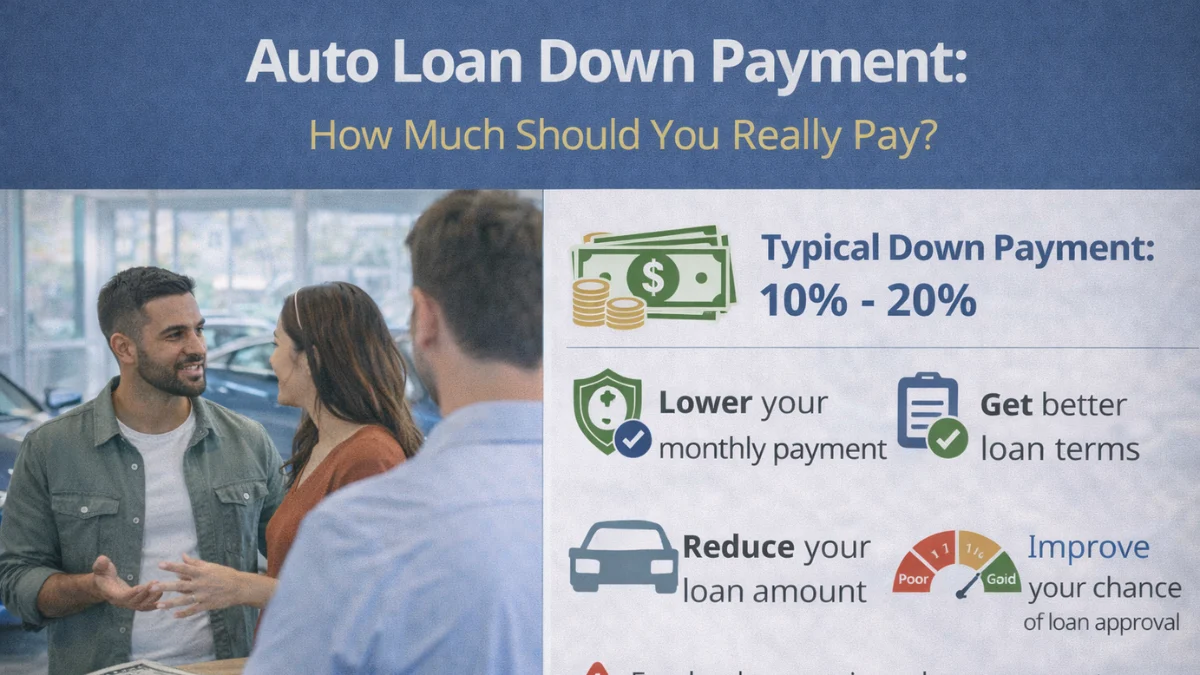
Financial experts generally recommend putting down at least 10%–20% of the car’s price.
For new cars, 20% is ideal because of rapid depreciation, while 10% may be acceptable for used cars.
However, the exact amount depends on your financial situation, income stability, and savings.
Paying more upfront reduces long-term costs, but you should also maintain an emergency fund.
Learning about auto loan approval factors can help you decide how much down payment is enough to secure better loan terms.
Benefits of Making a Larger Down Payment
A larger down payment offers several advantages beyond just lower monthly payments.
It reduces the total interest you pay, improves your chances of loan approval, and may qualify you for lower interest rates.
It also helps you build equity in your car faster, which is important if you plan to sell or refinance later.
Additionally, it minimizes financial risk by reducing your debt burden.
Understanding how auto loan interest works shows how even a small increase in your down payment can lead to significant savings.
Risks of Low or Zero Down Payment
While many lenders offer zero down payment options, they often come with higher interest rates and larger loan amounts.
This increases your monthly payments and total cost over time. It also raises the risk of negative equity, where you owe more than the car’s value.
If you face financial difficulties, this can make selling or refinancing difficult.
Before choosing a low down payment option, consider the long-term impact using an auto loan monthly payment guide to ensure you’re not overextending your budget.
Down Payment vs Monthly Payment: Finding the Right Balance
There’s always a trade-off between how much you pay upfront and your monthly payment. A higher down payment reduces monthly costs, while a lower down payment increases them.
The key is finding a balance that fits your financial situation.
You shouldn’t drain your savings just to lower your loan amount, but you also shouldn’t minimize your down payment if it leads to higher long-term costs.
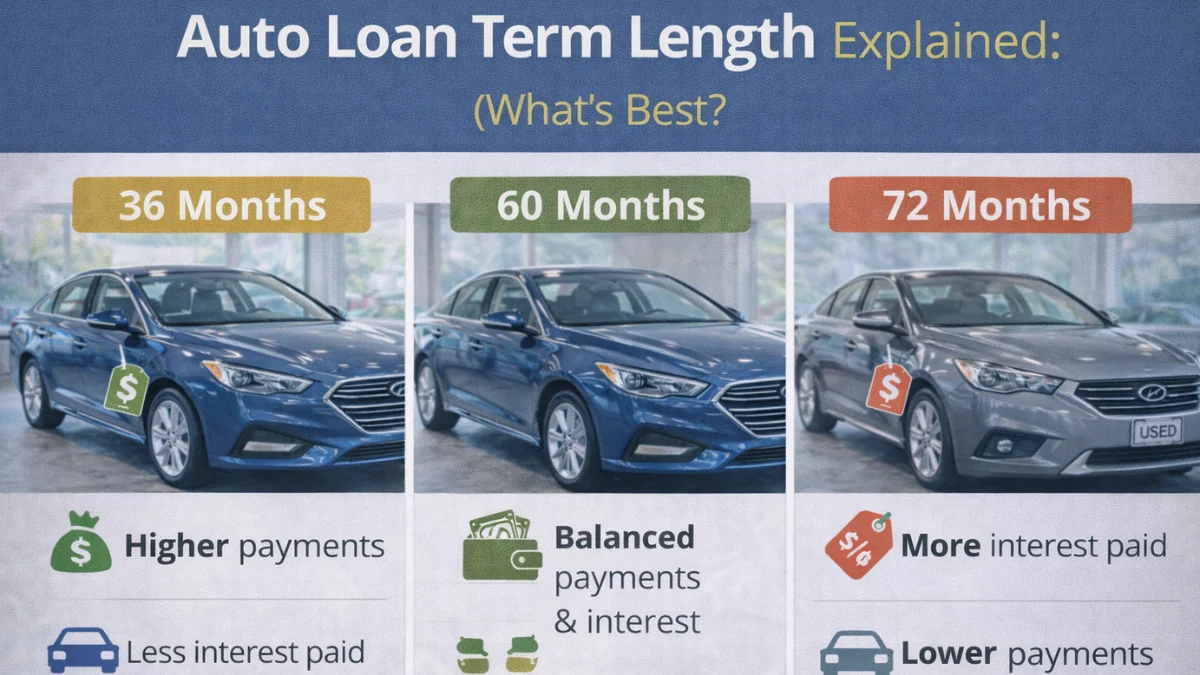
Evaluating options with auto loan term length options helps you create a balanced and sustainable repayment plan.
How Your Credit Score Affects Down Payment Requirements
Your credit score plays a major role in determining how much down payment you may need.
Borrowers with strong credit can qualify for lower down payments and better interest rates, while those with lower credit scores may be required to pay more upfront.
A higher down payment can also compensate for a lower credit score and improve approval chances.
Understanding how to get auto loan approval fast helps you prepare your finances and increase your chances of securing favorable loan terms.
Should You Use Savings or Finance the Entire Amount?
Using your savings for a down payment can reduce your loan cost, but it’s important not to exhaust your emergency funds.
Financial stability should always come first. If paying a large down payment leaves you financially vulnerable, it may be better to choose a moderate amount.
On the other hand, financing the entire car cost increases long-term expenses.
Evaluating your situation alongside auto loan mistakes to avoid helps you make a smarter decision without compromising financial security.
Can You Increase Your Down Payment Later?
Once your loan is finalized, you typically cannot increase your down payment directly.
However, you can make extra payments toward the principal to reduce your loan balance and interest.
This works similarly to increasing your initial down payment over time. Some borrowers also choose refinancing to improve loan terms.
Exploring auto loan refinancing options can help you adjust your loan if your financial situation improves later.
Frequently Asked Questions
Conclusion
Your auto loan down payment plays a crucial role in determining your monthly payments, interest costs, and overall financial stability.
While a larger down payment can save you money and improve loan terms, it’s important to balance it with your savings and financial goals.
By understanding your options and using tools like an auto loan calculator, you can make a smarter decision that fits your budget and minimizes long-term costs.

I create mortgage calculators and simple guides for Mortgage Rates Checker, helping users understand mortgage rates, refinancing, and home loan affordability. Content is for educational purposes only and not financial advice.