Auto Loan vs Personal Loan for Buying a Car: Which Is Better?
When buying a car, many borrowers wonder whether to choose an auto loan or a personal loan.
Both options can finance your purchase, but they work very differently.
Understanding interest rates, approval requirements, and long-term costs can help you decide which option is truly better for your situation.
What Is the Difference Between Auto Loan and Personal Loan?
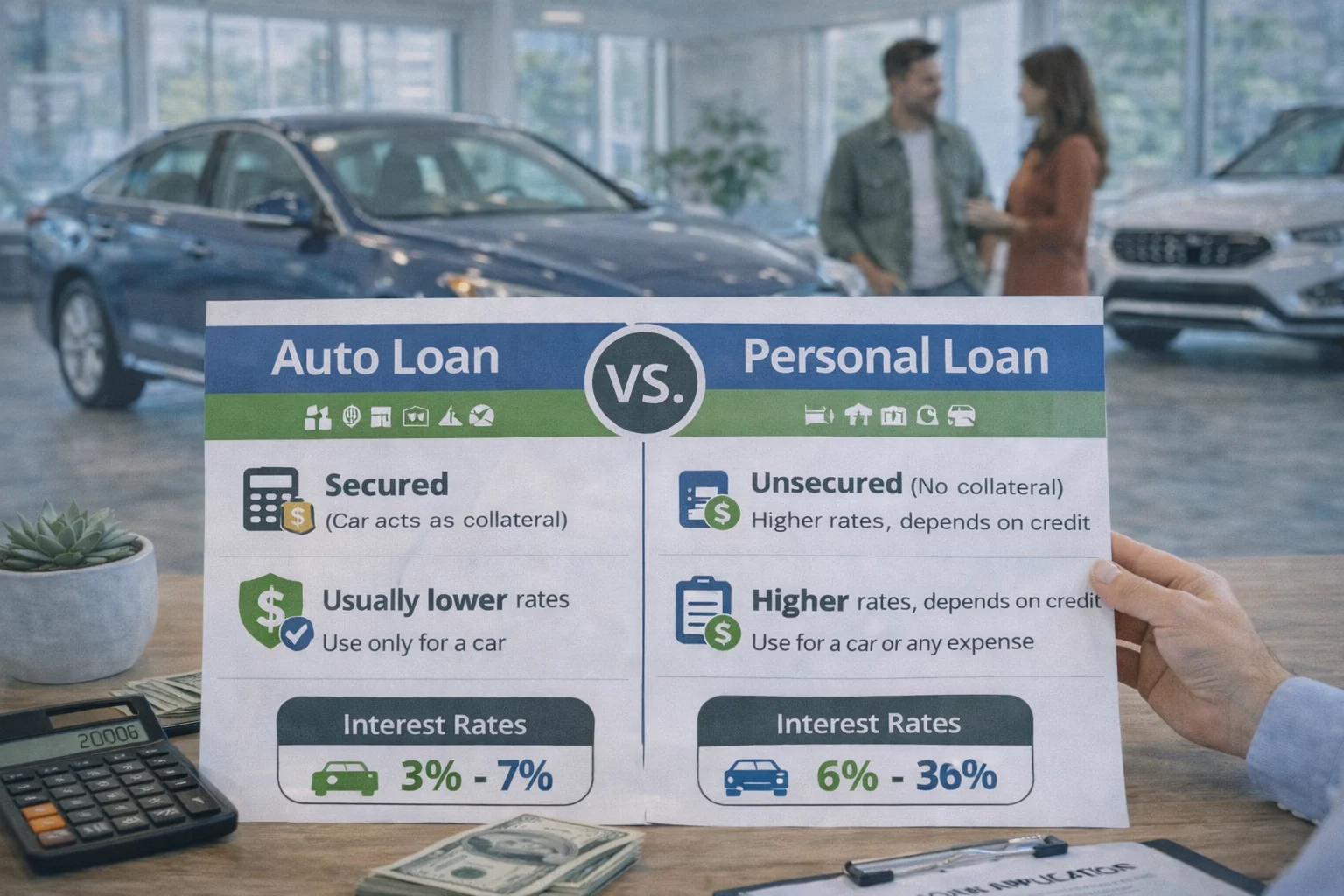
An auto loan is a secured loan specifically designed for purchasing a vehicle, where the car itself acts as collateral.
A personal loan, on the other hand, is usually unsecured and can be used for any purpose, including buying a car.
Because auto loans are backed by the vehicle, lenders offer lower interest rates compared to personal loans.
Personal loans provide flexibility but come with higher rates due to increased risk.
If you’re new to borrowing, understanding what an auto loan is helps you see why lenders treat these two options differently.
Which Loan Has Lower Interest Rates?
Auto loans almost always have lower interest rates than personal loans because they are secured by the vehicle.
This reduces the lender’s risk, allowing them to offer better terms.
Personal loans, being unsecured, carry higher interest rates, especially for borrowers with average or low credit scores.
Even a small difference in rates can significantly increase your total repayment cost.
Learning how auto loan interest works can help you understand why secured financing is often the more affordable option for car buyers.
Monthly Payments: Which Option Is More Affordable?
Auto loans typically offer lower monthly payments because they come with longer repayment terms and lower interest rates.
Personal loans usually have shorter terms and higher rates, which can increase monthly payments.
However, personal loans may be suitable if you want to pay off the loan quickly.
Before choosing, it’s important to estimate your payments accurately using an auto loan calculator so you can compare affordability and avoid financial strain.
Flexibility: Where Personal Loans Have an Advantage
One major advantage of personal loans is flexibility. You can use the funds for any purpose, and there are no restrictions on the type of car you purchase.
Auto loans, however, are limited to vehicle purchases and may have restrictions on car age or condition.
Personal loans also don’t require collateral, so there’s no risk of vehicle repossession. Still, this flexibility comes at a higher cost.
Understanding auto loan affordability planning helps you decide whether flexibility or lower cost is more important for your situation.
Approval Requirements: Which Is Easier to Get?
Approval criteria differ between auto loans and personal loans.
Auto loans are generally easier to get because they are secured, meaning the lender has less risk.
Even borrowers with lower credit scores may qualify, though at higher rates.
Personal loans require stronger credit profiles and stable income since there is no collateral involved.
Preparing in advance by understanding auto loan approval factors can increase your chances of getting approved with better terms.
Ownership and Risk Factors
With an auto loan, the car is tied to the loan, meaning the lender can repossess it if you fail to make payments.
With a personal loan, there is no direct link between the loan and the vehicle, reducing the risk of losing your car.
However, defaulting on a personal loan still damages your credit score and can lead to legal consequences.
Knowing the risks of auto loan default consequences helps you understand the responsibilities involved with secured financing.
Total Cost Comparison Over Time
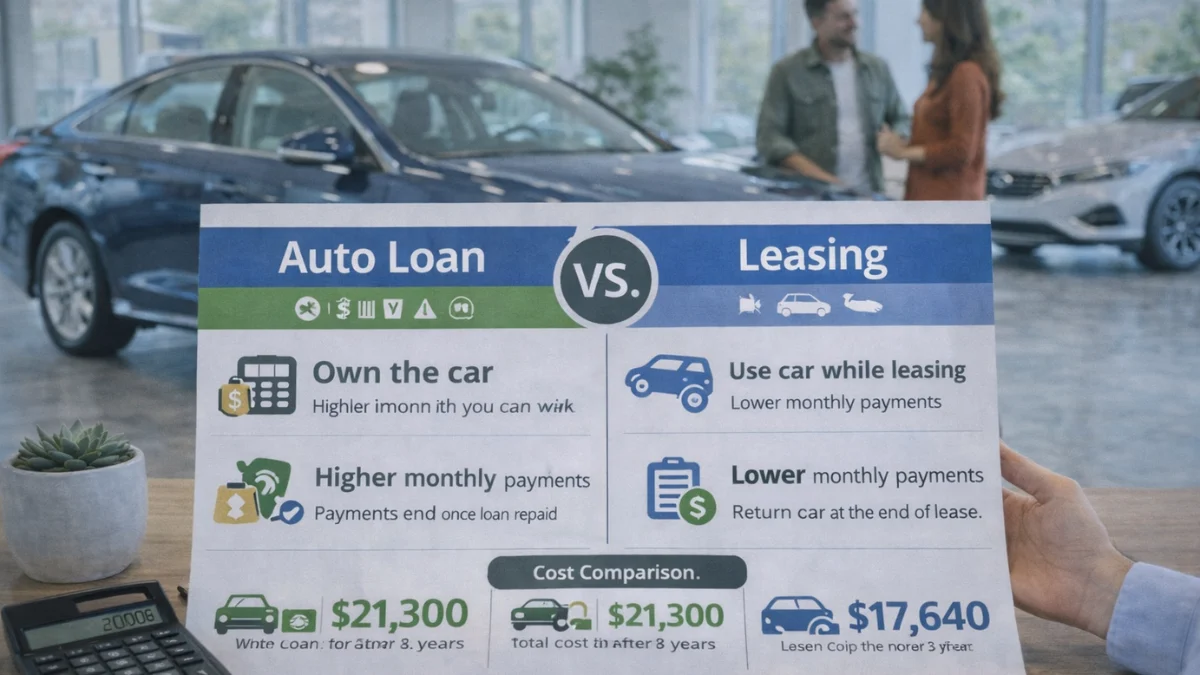
When comparing total costs, auto loans are usually cheaper due to lower interest rates and longer repayment terms.
Personal loans may seem convenient, but higher rates can significantly increase the total amount paid.
Over time, this difference can add up to thousands of dollars. If your goal is to minimize overall cost, auto loans are generally the better choice.
Understanding auto loan monthly payments and total repayment helps you evaluate which option truly saves money.
When Should You Choose a Personal Loan?
A personal loan might be the better option if you’re buying an older car that doesn’t qualify for auto loan financing or if you want complete flexibility without restrictions.
It can also work well if you plan to repay the loan quickly and avoid long-term interest costs.
However, this option is best suited for borrowers with strong credit who can secure lower interest rates.
Comparing scenarios using auto loan vs personal loan differences helps you decide if flexibility outweighs cost.
When Is an Auto Loan the Better Choice?
For most buyers, an auto loan is the better option due to lower interest rates, longer repayment terms, and easier approval.
It is especially beneficial for first-time buyers or those looking to reduce monthly payments. Auto loans also provide structured financing tailored specifically for car purchases.
Learning how auto loans work helps you understand why this option is widely preferred and often more cost-effective.
Common Mistakes When Choosing Between These Loans
Many borrowers choose personal loans without comparing interest rates, leading to higher costs.
Others take auto loans without considering loan terms or hidden fees. Not evaluating long-term affordability or ignoring credit score impact can also result in financial stress.
To avoid these issues, it’s important to research thoroughly and compare both options carefully.
Following advice from auto loan mistakes to avoid ensures you make a well-informed decision.
Frequently Asked Questions
Conclusion
Choosing between an auto loan and a personal loan depends on your financial situation, credit profile, and priorities.
Auto loans offer lower interest rates, better affordability, and structured repayment, making them ideal for most buyers. Personal loans provide flexibility but often come with higher costs.
By comparing both options, understanding total repayment, and using tools like an auto loan calculator, you can make a smart decision that aligns with your financial goals and helps you save money.

I create mortgage calculators and simple guides for Mortgage Rates Checker, helping users understand mortgage rates, refinancing, and home loan affordability. Content is for educational purposes only and not financial advice.