Buying a car is a major financial decision, whether you need a dependable vehicle for commuting, a family car, or your first set of wheels. While paying cash avoids borrowing costs, it is not realistic for every buyer. An auto loan can help you purchase a vehicle without paying the entire price upfront, but the amount you borrow, the interest rate, and the repayment term can significantly affect your finances.
The challenge is that getting approved for a car loan is only one part of the process. You also need to know how much you can comfortably afford, what lenders look for in an application, and how to compare financing offers without focusing exclusively on the monthly payment. A loan with a lower payment may cost more overall if it stretches repayment over a longer period.
This guide walks you through applying for an auto loan in the United States, preparing a stronger application, comparing offers, and reducing borrowing costs. The goal is to help you finance a vehicle that meets your needs without putting unnecessary pressure on your monthly budget.
What Is an Auto Loan and How Does It Work?
An auto loan is financing used to purchase a vehicle. You borrow money from a bank, credit union, online lender, or dealership-arranged financing provider and repay it through scheduled installments, usually monthly. Your payment generally covers principal and interest, while the vehicle serves as collateral for a typical secured auto loan.
The total cost depends on the amount financed, annual percentage rate (APR), repayment term, and applicable fees. A larger down payment can reduce the amount you borrow, while a higher APR increases borrowing costs. If you fail to make payments as agreed, the lender may repossess the vehicle, subject to applicable law and the terms of your contract.
Before applying, learn how auto loans work so you understand the relationship between the loan amount, interest, repayment schedule, and total cost.
How to Apply for an Auto Loan: Step-by-Step
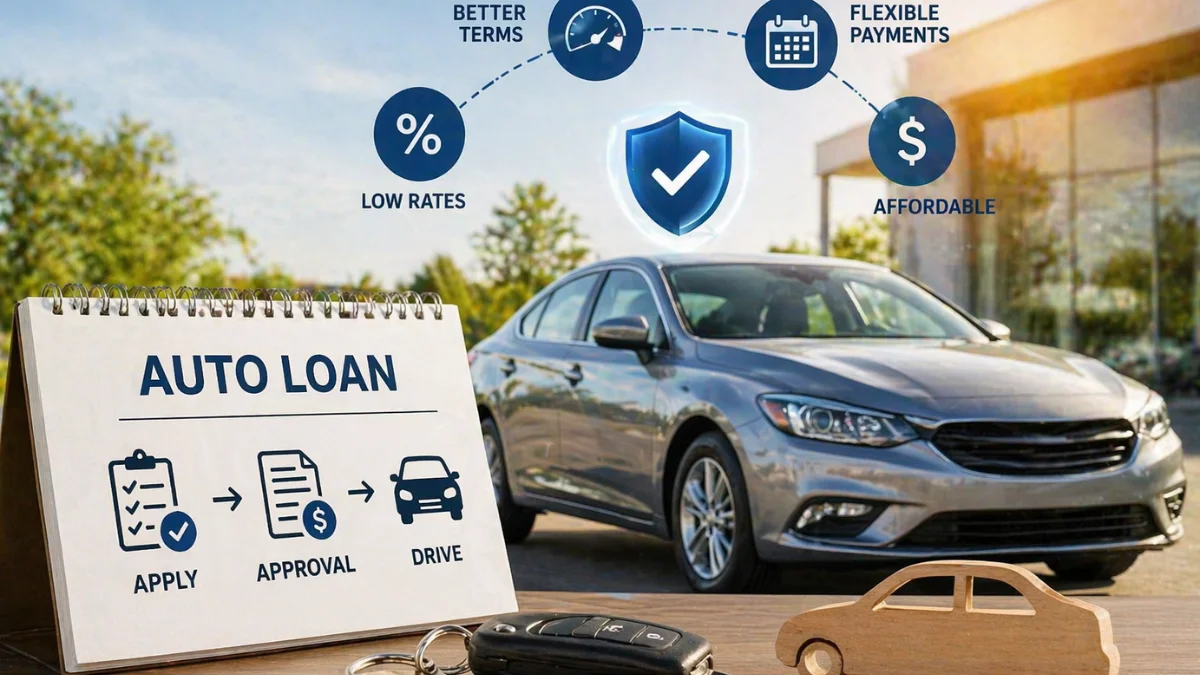
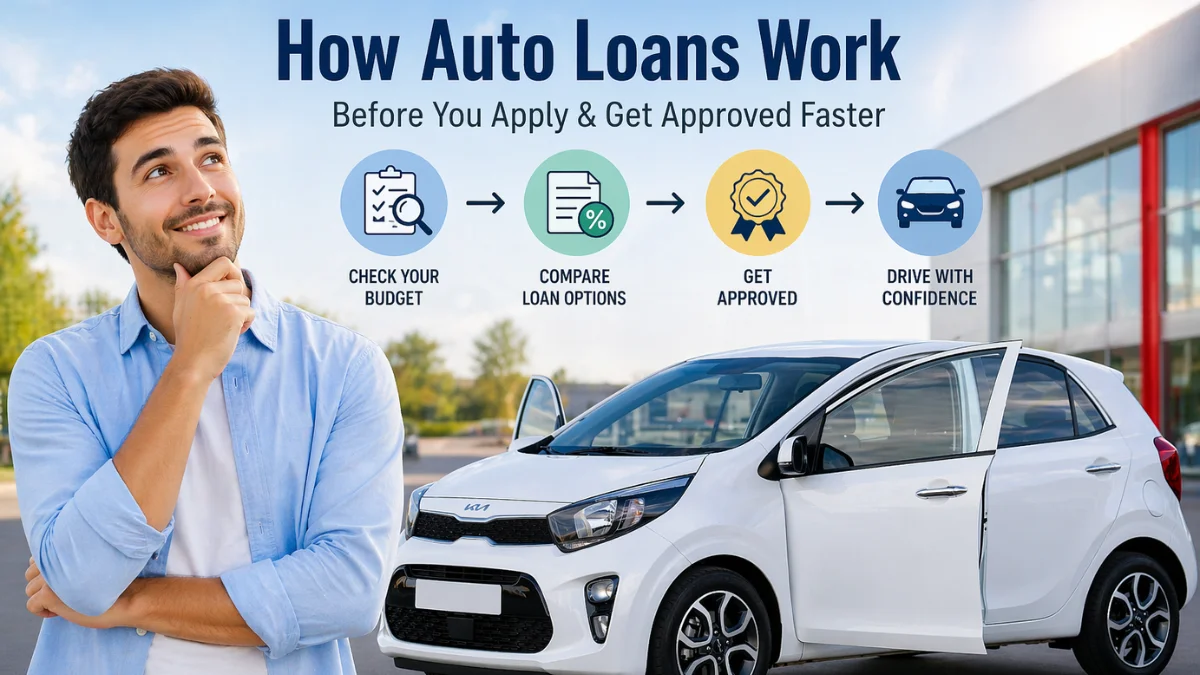
Applying for a car loan becomes easier when you prepare your finances before visiting a dealership. You do not have to accept the first financing offer you receive, and getting a loan quote before choosing a vehicle can help you make a more informed decision.

Review your credit and finances
Check your credit reports for errors, calculate your existing monthly debt payments, and estimate how much you can put toward a down payment.

Set a realistic car budget
Decide how much you can spend on the vehicle while leaving room for insurance, fuel, maintenance, registration, and unexpected repairs.

Compare lenders
Request quotes from banks, credit unions, online lenders, and, where appropriate, dealership financing providers. Compare the APR, loan term, fees, and total repayment cost.

Get pre-approved when possible
A pre-approval can help you understand your potential borrowing limit and financing terms before negotiating with a seller. It is not always a guarantee of final approval.

Choose the vehicle and submit your application
Once you know your budget, select a car that fits it and provide the lender with the requested financial and vehicle information.

Review the final contract
Confirm the vehicle price, amount financed, APR, repayment term, monthly payment, fees, and any optional products before signing.
The Consumer Financial Protection Bureau (CFPB) recommends shopping around rather than relying on a single financing offer. You can also review the Federal Trade Commission’s car financing guidance before entering into an agreement.
What to Read Next?
What Do You Need to Apply for an Auto Loan?
Lenders need enough information to evaluate whether you can repay the loan and whether the vehicle meets their financing requirements. The exact documentation varies by lender, borrower, and vehicle.
Prepare the following where applicable:
- Identity and contact details: Government-issued identification, current address, and other information requested by the lender.
- Income verification: Recent pay stubs, employment details, or other proof of income. Self-employed applicants may need tax returns or additional financial records.
- Employment information: Your employer, occupation, employment history, or business details.
- Housing and debt information: Monthly rent or mortgage costs, existing loan payments, and other financial obligations.
- Down payment details: The amount you plan to pay upfront and, if relevant, information about a trade-in vehicle.
- Vehicle information: The purchase price and details identifying the car. A lender may request additional information about a used vehicle.
Providing complete, accurate information can help avoid unnecessary delays. Do not inflate your income, omit debts, or misrepresent employment details to qualify for a larger loan. An application should reflect your actual financial situation.
What Factors Affect Auto Loan Approval?
Approval decisions depend on the lender’s criteria, the loan amount, and the details of your application. No single credit score or income level guarantees approval across all lenders.
Credit score and credit history
Your credit profile can affect both approval and the interest rate offered. A history of on-time payments and responsible borrowing may help, while missed payments, high credit card balances, or limited credit history can make approval more difficult or expensive.
Before applying, check your credit reports for errors and address problems where possible. If your credit needs improvement, compare the options available to you rather than assuming you must accept the first offer.
Read more about auto loans with bad credit if your credit history may limit your choices.
Income and existing debts
Lenders assess whether your income can support the proposed payment alongside your existing obligations. A steady income can help demonstrate repayment capacity, but the lender may also consider employment history, income stability, and the size of your debts.
A person earning a relatively high income may still struggle to qualify if a large share of that income already goes toward other payments. Conversely, a borrower with a more modest income may have a stronger application if the requested loan is affordable and their other financial obligations are manageable.
Down payment and vehicle price
A larger down payment reduces the amount you need to finance. It may also improve the loan-to-value position, depending on the vehicle’s value and the lender’s rules. However, using every dollar of your savings as a down payment can leave you financially vulnerable if an emergency occurs.
Choose a down payment that balances lower borrowing costs with an adequate cash reserve. Learn how auto loan down payments affect your financing decision.
Loan term and vehicle condition
The repayment term affects the monthly payment and the total interest paid. Lenders may also apply different requirements to new and used vehicles, including limits based on age, mileage, or vehicle value.
For a more detailed explanation, see auto loan approval factors. The CFPB also explains how credit, income, debt, down payment, and loan length can influence an auto loan rate.
How to Choose an Auto Loan You Can Afford
A lender’s maximum approved amount is not necessarily the amount you should borrow. Your goal is to find a payment that fits your actual household budget, including expenses that do not appear on the loan agreement.
Start by estimating your total monthly car ownership cost:
| Expense | What to include |
|---|---|
| Loan payment | Principal and interest |
| Insurance | Your expected premium for the specific vehicle |
| Fuel or charging | Typical monthly driving costs |
| Maintenance and repairs | Routine servicing, tires, and a repair reserve |
| Registration and taxes | Applicable recurring costs, where relevant |
| Parking and tolls | Costs associated with your location and commute |
For example, suppose a lender offers you a $28,000 auto loan. Before accepting, consider whether the monthly payment still leaves enough money for your housing, food, existing debt payments, savings, and other essentials. Insurance costs may also differ substantially between two vehicles with similar purchase prices.
Use the Auto Loan Calculator to estimate monthly payments under different loan amounts, interest rates, and repayment terms. Treat the result as an estimate; the actual lender offer may include different fees or conditions.
You can also check your broader budget with the auto loan affordability guide before committing to a purchase.
How to Compare Auto Loan Offers and Interest Rates
When comparing financing offers, look beyond the advertised interest rate. The annual percentage rate (APR) generally reflects the interest rate plus certain borrowing costs, making it a useful comparison measure. Compare APRs with APRs and make sure you are comparing loans with similar terms and amounts.
Review these details for each offer:
- APR: The annual cost of borrowing, including certain fees.
- Amount financed: The amount you will actually borrow after accounting for the down payment and other transaction details.
- Loan term: The number of months over which you will repay the loan.
- Monthly payment: The amount due each month under the proposed terms.
- Total repayment: The total of scheduled payments, plus any upfront costs that apply, so you can understand the complete cost of financing.
- Prepayment terms: Whether you can pay extra or settle the loan early without a penalty.
For example, imagine you are comparing two offers for a $25,000 loan. One has a lower monthly payment because it runs for longer, while the other requires higher monthly payments over a shorter period. The first may be easier on your monthly budget, but it can cost more in total interest.
Do not assume the dealership’s offer is the cheapest, and do not assume a bank will automatically offer the best rate either. Compare actual offers from several sources. The CFPB explains why loan length, APR, and the amount financed matter when comparing auto loans.
For a closer look at borrowing costs, read how auto loan interest works.
Practical Ways to Save Money on Your Car Loan
You do not need an unusually high income to make a smarter financing decision. Several choices made before signing can reduce what you pay or help prevent financial pressure later.

Get pre-approved before visiting the dealership
Pre-approval gives you a reference point for evaluating dealership financing. It can also help you separate the vehicle purchase negotiation from the financing decision.
Compare the final dealership offer against your existing quote, including APR, term, fees, and total cost. Remember that a pre-approval may be conditional and can change after the lender reviews the vehicle and verifies your information.
Learn more about auto loan pre-approval.

Negotiate the vehicle’s total price
Ask for the vehicle’s written out-the-door price, including applicable taxes and fees. Negotiate the purchase price separately from the monthly payment so a longer loan or additional products do not disguise the true cost.
You should also request an itemized breakdown of optional add-ons. Extended warranties, protection packages, and other products can increase the amount financed. Buy them only if their coverage and cost make sense for your circumstances.
The FTC recommends focusing on the complete purchase price and comparing financing before agreeing to the transaction.

Choose a shorter term if the payment is comfortable
A shorter loan term generally reduces the total interest paid, all else being equal, because you repay the balance more quickly. However, it also increases the required monthly payment.
Do not choose a short term that leaves you unable to cover essential expenses. The right term is one that balances total borrowing costs with a manageable payment and sufficient savings.
Compare auto loan term lengths before deciding.

Make a sensible down payment
A down payment reduces the amount borrowed and can lower the interest paid over the life of the loan. It may also reduce the chance of owing more than the car is worth, although depreciation and the loan terms still matter.
Avoid draining your emergency savings simply to reduce the loan. If a larger down payment leaves you unable to cover an unexpected bill, the trade-off may not be worthwhile.

Shop around within a focused period
Request quotes from several lenders within a relatively short shopping period. Depending on the credit-scoring model, auto loan inquiries made within a specified period are often treated as a single inquiry for scoring purposes. The applicable window varies by model, so avoid spreading applications unnecessarily over many months.
The CFPB discusses this process in its guidance on shopping for an auto loan.

Consider a less expensive vehicle
Reducing the purchase price can save more than negotiating a small difference in the interest rate. A less expensive car may mean a smaller loan, a lower payment, and less interest over time.
Compare new and used vehicles based on the complete cost of ownership, including insurance, expected maintenance, fuel economy, and reliability, not just the advertised price.
Auto Loan Mistakes That Can Cost You More
Even an approved loan can become a poor financial decision if you overlook the contract or stretch your budget too far.
Common mistakes include:
- Focusing only on the monthly payment: A lower payment can conceal a longer term and higher overall borrowing costs.
- Skipping lender comparisons: Accepting the first offer can mean missing more competitive financing.
- Financing unnecessary extras: Optional products increase the amount you borrow and may add interest costs.
- Ignoring the full purchase price: Taxes, dealer fees, and add-ons can make a vehicle more expensive than its advertised price.
- Borrowing too much: A loan that leaves little room for essential expenses can become difficult to manage.
- Overlooking early repayment conditions: Check whether additional payments are allowed and how they are applied to principal.
- Signing before the terms are final: Confirm that financing is fully approved and that the written agreement matches what you were promised.
Review common auto loan mistakes before finalizing your purchase.
What If Your Auto Loan Application Is Denied?
A rejection does not necessarily mean you will never qualify for vehicle financing. It means you need to understand the lender’s decision before deciding what to do next.
Depending on the circumstances, the lender may have concerns about your credit history, income, existing debts, requested loan amount, down payment, or the vehicle itself.
Start by asking the lender for the reason for the denial and reviewing any adverse-action notice you receive. If a credit report contributed to the decision, check it for inaccuracies and dispute errors with the relevant credit reporting agency.
You may be able to strengthen a future application by reducing existing debt, saving a larger down payment, choosing a less expensive vehicle, or allowing time to establish a more consistent credit history. A co-signer may be an option in some cases, but that person takes on legal repayment responsibility and should understand the risk.
Avoid applying repeatedly without addressing the underlying problem, and be cautious of lenders promising guaranteed approval regardless of credit or income.
Conclusion
Getting an auto loan is about more than securing approval. A good financing decision starts with a realistic budget, continues with careful comparison of lender offers, and ends with a contract whose costs and conditions you fully understand.
Before applying, review your credit, decide how much you can comfortably borrow, and compare APRs, loan terms, and total repayment costs. Negotiate the vehicle price separately, evaluate optional fees, and preserve enough savings for emergencies and ongoing car expenses.
Most importantly, do not borrow the maximum amount a lender offers simply because you qualify for it. Use the Auto Loan Calculator to compare possible payments and choose financing that supports your transportation needs without compromising your wider financial stability.