Average 30 Year Mortgage Rate: What’s Normal?
When homeowners hear that mortgage rates are “high” or “low,” the next logical question is: what’s actually normal for..

When homeowners hear that mortgage rates are “high” or “low,” the next logical question is: what’s actually normal for a 30-year mortgage rate?
Without context, today’s rates can feel extreme, either surprisingly expensive or unusually cheap.
Understanding what an average 30-year mortgage rate looks like over time helps homeowners judge whether current rates are reasonable, how they compare historically, and whether refinancing or buying makes sense right now.
What the Average 30 Year Mortgage Rate Represents
The average 30-year mortgage rate reflects the typical interest rate lenders charge borrowers for a fixed-rate loan over a long period.
It smooths out daily fluctuations and shows how the mortgage market prices long-term lending risk at a given time.
Looking at averages rather than daily quotes helps homeowners understand where current pricing fits within broader market conditions.
What’s Considered a “Normal” 30 Year Mortgage Rate Historically
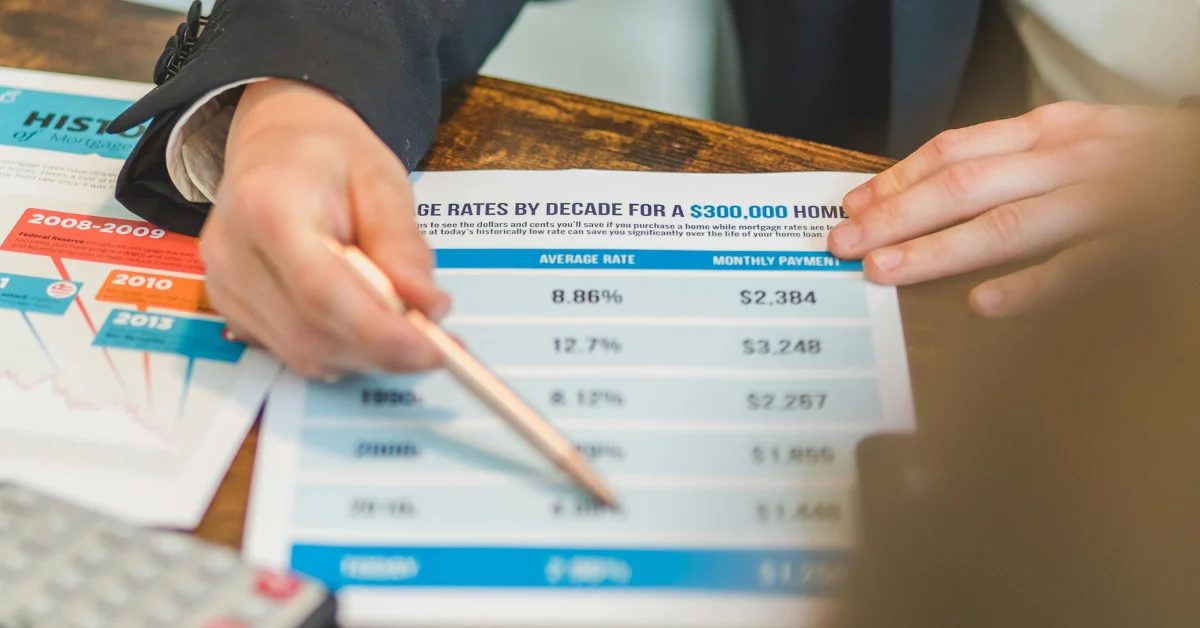
Historically, a “normal” 30-year mortgage rate has often fallen in the mid-5% to mid-6% range when viewed across multiple decades.
There have been periods far above this range (notably in the late 1970s and early 1980s) and periods far below it (especially after the 2008 financial crisis).
This historical context shows that rates many homeowners now view as “high” are actually close to long-term norms.
Why Recent Years Skew Perceptions of Normal Rates
Exceptionally low mortgage rates in recent years reset expectations for many homeowners. Rates in the 2%–3% range were historically rare and driven by extraordinary economic conditions.
Comparing today’s rates only to those recent lows can make current pricing feel unusually high, even when it aligns closely with long-term averages.
This is why understanding refinance rates today vs last year and beyond is more helpful than focusing on record lows.
How Economic Conditions Define What’s Normal
Mortgage rates respond to inflation, employment data, bond markets, and central bank policy.
When inflation is stable and economic growth is moderate, mortgage rates tend to settle into a “normal” range. When inflation rises or uncertainty increases, rates move higher.
Understanding these forces helps homeowners see that “normal” is tied to economic balance, not a fixed number.
Comparing Today’s Rates to the Long-Term Average
When comparing today’s mortgage rates to long-term averages, the key question isn’t whether rates are lower than the past few years it’s whether they’re reasonable relative to historical norms.
Many homeowners find that today’s rates are closer to average than headlines suggest, which reframes decisions around buying or refinancing your mortgage more realistically.
Why “Normal” Doesn’t Mean “Best” for Every Homeowner
Even if today’s rate is historically normal, it may or may not be right for you.
Your credit score, equity, loan type, and financial goals determine whether refinancing or locking in a rate makes sense.
A rate that’s normal for the market can still produce strong savings or none at all depending on your situation.
How Homeowners Use “Normal” Rates to Decide on Refinancing
Understanding what’s normal helps homeowners:
- Avoid waiting indefinitely for unrealistic rate drops
- Set realistic expectations for refinancing outcomes
- Focus on total cost and break-even timing instead of headlines
Using a refinance calculator alongside historical context helps translate “normal” rates into real numbers that reflect your monthly payment and long-term cost.
When a Normal Rate Can Still Be a Good Opportunity
A normal mortgage rate can still be a great opportunity when:
- Your current rate is well above today’s average
- You’re improving loan structure or removing mortgage insurance
- You’re gaining payment stability or reducing risk
This is why comparing current refinance rates to your existing loan matters more than comparing them to historical extremes.
Conclusion
So, what’s a normal 30-year mortgage rate? Historically, it’s one that sits comfortably within long-term averages not the rare highs or record lows that dominate headlines.
Understanding what’s normal helps homeowners make calmer, more informed decisions about buying or refinancing.
When you combine historical perspective with your personal financial profile, you can judge whether today’s mortgage rates make sense for you, not just whether they sound high or low in the news.
Mortgage Calculator
Recommended Mortgage Tools
Refinance Break-Even Calculator
See how long it takes to recover refinance costs.
Debt-to-Income Ratio Calculator
Check if your income supports mortgage approval.
Refinance Readiness Checker
Find out if now is the right time to refinance.
Mortgage Eligibility Checker
Quickly see if you qualify for a home loan.
First-Time Buyer Readiness
Know if you're ready to buy your first home.
Mortgage Pre-Approval Calculator
Estimate how much you can borrow instantly.
Next Read
Featured Mortgage Insights
Many families are delaying home loan decisions as rising housing costs, mortgage rate uncertainty, and long-term financial commitments create hesitation. Buyers are taking more time to evaluate affordability, savings stability, and future financial risks before committing to homeownership.

Featured Mortgage Insights
Mortgage rates may appear stable, but buyer behavior continues to evolve as affordability concerns and long-term financial planning influence homeownership decisions. Buyers are reassessing budgets, loan choices, and purchase timing despite consistent borrowing conditions.
Featured Mortgage Insights
Mortgage payments often feel like they should stay the same forever, especially if you have a fixed-rate loan. But..



About the Author: Ratiranjan Singha

Don’t Miss These