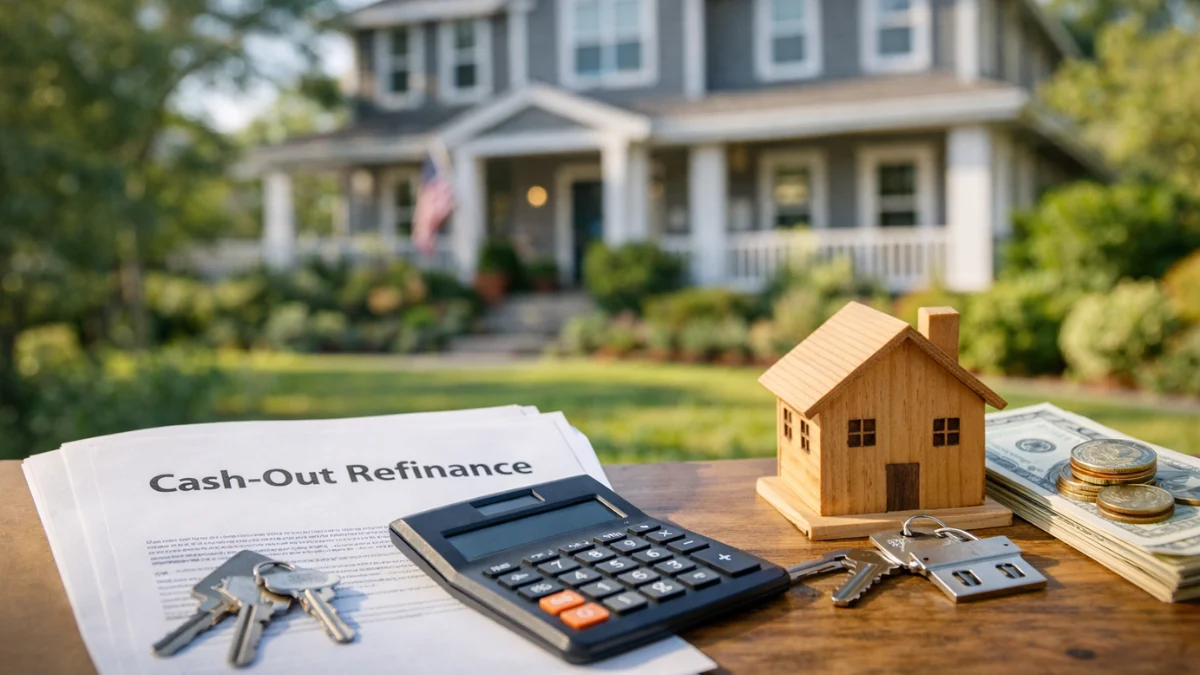
Check today’s cash-out refinance rates (April 2026): What You’ll Actually Pay
As of April 2026, cash-out refinance rates range from about 6.00% to 6.75% for 30-year loans, 5.375% to 5.875% for 15-year terms, and around 6.125% for ARMs. Rates vary based on credit score, LTV, and lender.
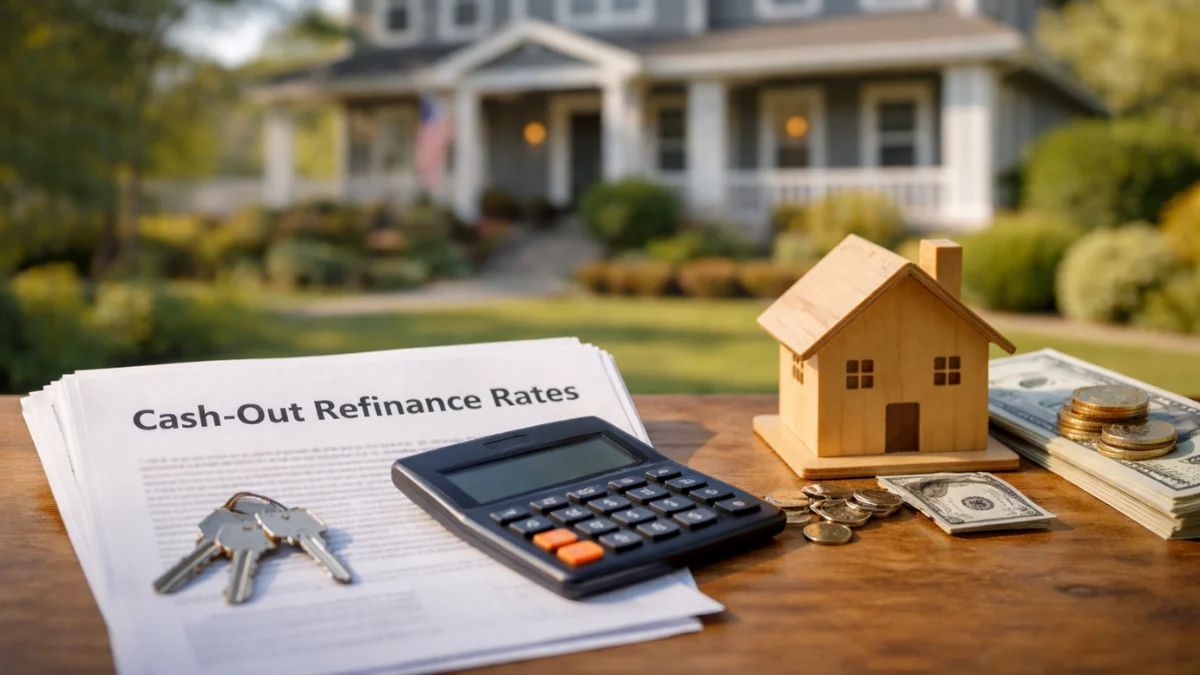
Understanding cash out refinance rates today is critical if you’re considering tapping your home equity to fund debt consolidation, renovations, or other major expenses.
Cash-out refinance rates are influenced by market conditions, your credit profile, property type, and loan purpose and they’re typically slightly higher than standard refinance rates because you’re borrowing more against your home.
This guide breaks down what today’s cash-out refinance rates mean, how they compare to other refinancing options, and what to look for when you compare offers.
Cash-out refinance rates today are in the mid-to-high 6% range for 30-year fixed loans, with 15-year options offering lower rates in the mid-to-high 5% range.
As of April 2026, these loans remain slightly more expensive than standard refinances due to increased lender risk.
Borrowers can use cash-out refinancing to tap into home equity for debt consolidation or major expenses.
However, rates vary based on credit score, loan-to-value ratio, and lender terms, making comparison essential for securing the best deal.
What “Cash Out Refinance Rates Today” Means
“Cash out refinance rates today” refers to the interest rates lenders are offering on new mortgages that include cash proceeds in excess of your current balance.
These rates reflect current market pricing and lender risk appetite.
Because cash-out refinances increase the loan balance and often involve higher loan-to-value (LTV) ratios, lenders usually charge a small premium over rate-and-term refinance rates.
Typical Cash Out Refinance Rate Benchmarks
Current cash-out refinance rate benchmarks based on recent lender surveys and national averages show:
- 30-year fixed cash out refinance rates often in the mid-6% range for primary residences
- Slightly higher rates for investment or rental property cash-out refinances
- Lower nominal rates possible on shorter terms (like 15-year) but with higher monthly payments
These benchmarks vary over time based on broader mortgage rate trends.
Why Cash Out Refinance Rates Are Often Higher Than Standard Refinance
Lenders typically quote cash out refinance rates slightly above standard refinance rates for several reasons:
- Higher loan amounts increase lender risk
- More equity extraction leaves less cushion if property values fall
- Higher loan-to-value (LTV) ratios make loans riskier
This is why comparing refinance home equity how it differs from cash out helps you understand the structural causes for pricing differences.
Market Conditions That Influence Today’s Cash Out Rates
Cash-out refinance rates follow broader mortgage trends.
For example, when average 30-year fixed mortgage rates decline as they have recently with averages dipping near 6% or lower cash out refinance pricing often improves too, though not always as steeply as standard refinances.
Monitoring refinance interest rates today vs last year provides context for whether today’s cash-out rates are favorable.
How Your Credit Score Shapes Your Cash Out Rate
Even though cash-out refinances are secured by home equity, lenders still price risk based on:
- Credit score: Higher scores typically secure lower rates
- Credit history: On-time payments matter
- Debt-to-income ratio: Lower DTI signals better repayment capacity
Understanding what lenders look at for refinance approval helps you see how your profile influences your rate.
Loan-to-Value (Equity) and Its Impact on Rate Pricing
Loan-to-value (LTV) plays a major role in pricing.
Most lenders cap cash-out refinances at 70%-80% LTV depending on property type and loan program.
Higher LTVs meaning less equity retained often result in higher refinance rates due to increased risk.
Comparing Cash Out Rates by Property Type
Today’s cash-out refinance rate patterns differ by property use:
- Primary residences generally qualify for the most competitive pricing
- Paid-off homes often receive similar pricing to primary homes if credit and income are strong
- Rental or investment properties typically carry higher cash-out refinance rates due to increased lender risk
This tiered pricing reflects how lenders view borrower risk based on property occupancy and income generation.
How Cash Out Refinance Rates Compare by Loan Term
Longer-term loans (like 30-year cash-out refinances) usually have slightly higher rates than shorter-term options (like 15-year or 20-year).
While shorter terms may offer lower nominal rates, they often come with higher monthly payments and must align with your cash flow and long-term goals.
Rate vs APR: What You Should Compare
Interest rate alone doesn’t tell the whole story. APR (Annual Percentage Rate) includes fees and points rolled into the loan cost, giving a better picture of your true cost of borrowing.
This is especially important for cash-out refinances because closing costs can be significant and affect your effective rate.
When Today’s Cash Out Refinance Rates Make Sense
Today’s cash-out refinance rates may make sense when:
- Rates are lower than your current mortgage rate
- You need to pay off high-interest debt
- You’re funding value-adding home improvements
- You plan to stay in the home long enough to recover closing costs
In these scenarios, the net financial benefit can outweigh the rate premium that cash-out refinancing often carries.
When Cash Out Refinance Rates May Not Be Ideal
Cash-out refinance rates may be less ideal when:
- They are only marginally lower than your current rate
- Closing costs erase most of the monthly savings
- You plan to sell or move soon
- The cash is used for non-essential spending
In these cases, alternatives like HELOC or home equity loans may present lower cost paths.
How to Shop for the Best Cash Out Refinance Rate
To find competitive cash-out refinance rates today:
- Compare multiple refinance quotes from different lenders
- Check both interest rates and APR
- Improve credit score before applying
- Lock your rate when conditions are favorable
Comparing offers side by side reveals the real options available to you.
Conclusion
Cash out refinance rates today reflect current mortgage market conditions, your personal profile, property type, and lender risk pricing.
While they are often slightly higher than standard refinance rates, the true financial impact depends on how the refinance fits your goals e.g., debt payoff, renovations, or liquidity needs.
Always compare personalized refinance quotes and evaluate total cost using APR and long-term projections. When done thoughtfully, cash-out refinancing can be a powerful financial tool; when done without full analysis, it can quietly increase cost and risk.
Mortgage Calculator
Recommended Mortgage Tools
Refinance Break-Even Calculator
See how long it takes to recover refinance costs.
Debt-to-Income Ratio Calculator
Check if your income supports mortgage approval.
Refinance Readiness Checker
Find out if now is the right time to refinance.
Mortgage Eligibility Checker
Quickly see if you qualify for a home loan.
First-Time Buyer Readiness
Know if you're ready to buy your first home.
Mortgage Pre-Approval Calculator
Estimate how much you can borrow instantly.
Next Read
Featured Mortgage Insights
Mortgage forbearance is becoming a topic many homeowners are researching as financial pressure grows. When monthly housing costs feel overwhelming, some borrowers begin exploring mortgage forbearance as a temporary way to pause or reduce payments while they work to stabilize their finances.

Featured Mortgage Insights
Home loans now demand greater financial preparation as buyers face stricter affordability checks and higher borrowing costs. Many borrowers are improving credit, managing debt, and strengthening savings before applying to ensure smoother approval and long-term payment stability.
Featured Mortgage Insights
Home loans are encouraging buyers to look beyond monthly mortgage payments and consider long-term financial responsibilities. Rising housing costs and rate uncertainty are pushing borrowers to evaluate total ownership expenses, future flexibility, and overall financial stability before committing to homeownership.



About the Author: Ratiranjan Singha

Don’t Miss These