6 Million Homes at Risk: Why Flooding Could Become the Next Mortgage Crisis
Experts warn flood risk is becoming a growing threat to the housing market. With millions of homes already exposed, banks may face rising mortgage risks, higher insurance costs, and declining property values as climate change reshapes lending decisions and long-term homeownership stability.

Flood risk is becoming an overlooked issue in the housing finance system. Experts warn that millions of homes in flood-prone areas could face higher insurance costs, declining property values, and stricter mortgage lending standards.
With climate risks rising and a key insurance safety net scheduled to end in 2039, lenders may soon have to rethink how they evaluate mortgage risk.
A New Threat Emerging in the Mortgage Market
Mortgage lenders traditionally evaluate borrowers based on credit history, income stability, debt levels, and property value. But another factor is increasingly entering the conversation among regulators and financial analysts: climate-related property risk.
Across the UK housing market, flooding is becoming a growing concern. Government estimates indicate that more than 6.3 million properties in England are located in areas at risk of flooding, a number expected to rise as extreme weather events become more frequent.
For mortgage lenders, environmental risks introduce new uncertainties. If a property repeatedly faces flood damage or rising insurance costs, its long-term value may decline — which directly affects the security of a mortgage loan.
For homeowners and buyers trying to understand how these risks interact with housing finance, resources like the ultimate refinancing guide explain how lenders assess property risk, loan structure, and borrower eligibility when approving or replacing a mortgage.
Why Flooding Matters for Mortgage Lending
Mortgage loans are secured by the value of the home itself. When environmental risks threaten that value, lenders must reconsider how they evaluate loans.
Flood exposure can influence mortgage lending in several ways.
First, property values may decline if buyers begin avoiding flood-prone areas. Second, lenders require homeowners to maintain property insurance throughout the life of the loan. If insurance becomes expensive or difficult to obtain, lenders may view those homes as higher risk.
This also affects homeowners who want to refinance their loan. Borrowers often compare current refinance rates or analyze refinance interest trends when deciding whether replacing their mortgage will reduce monthly payments or improve long-term affordability.
If flood risk begins affecting property valuations or insurance requirements, it could also influence refinancing eligibility.
The Role of Flood Re in the Housing Market
To address insurance challenges for flood-prone properties, the UK introduced the Flood Re program about a decade ago.
The system allows insurers to transfer flood-related risk into a government-backed pool, helping homeowners maintain affordable insurance coverage. Today, the program operates with roughly £3.2 billion in reinsurance capacity.
However, Flood Re’s leadership now warns the program may have created an unintended side effect in the mortgage market.
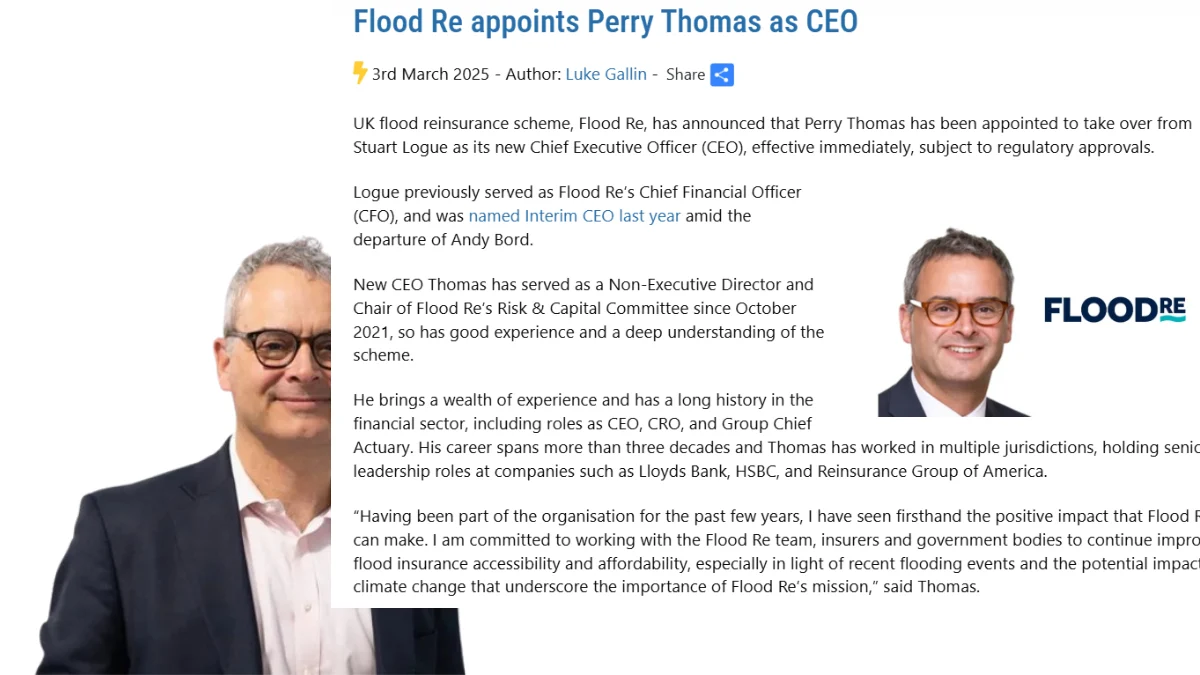
According to CEO Perry Thomas, the safety net has introduced what economists call a moral hazard – where lenders rely on the insurance program rather than actively managing flood exposure in their mortgage portfolios.
Without pricing signals reflecting the true cost of flood risk, lenders may feel less pressure to adjust lending decisions.
The Growing Concern About Flood Re Ending in 2039
Flood Re was designed as a temporary solution and is scheduled to wind down in 2039.
If the program ends without a replacement, homeowners in flood-risk areas could face significantly higher insurance premiums. Some properties may even become difficult to insure.
Financial institutions have already begun modeling this possibility.
Major lenders including Lloyds Banking Group, NatWest, HSBC, and Barclays have referenced flood-related insurance risks in climate scenario analysis. Some banks warn that if insurance becomes limited, homeowners could face declining property values and increasing affordability challenges.
For borrowers evaluating mortgage options or refinancing decisions, understanding how refinance rates work and monitoring refinance rates can help determine whether adjusting loan terms makes sense before market conditions change.
Early Signs of Lending Changes
While most lenders have not yet implemented widespread flood-risk restrictions, some institutions have started adjusting their strategies.
Nationwide Building Society previously announced it would stop issuing mortgages on certain properties located in high flood-risk areas. At the time the decision was controversial, but analysts now view it as an early attempt to manage climate-related lending exposure.
Housing experts suggest similar policies could eventually become more common if environmental risk continues to increase.
Bank of England Warning About Housing Risk
Financial regulators are also paying closer attention to the issue.
Officials at the Bank of England have warned that while insurance programs currently help cushion households from climate risks, the long-term outlook could be different.
If flood risk intensifies and insurance availability declines, homeowners could face higher repair costs, increased insurance premiums, falling home prices, and greater difficulty refinancing mortgages.
These concerns highlight how environmental risk may increasingly intersect with traditional mortgage decisions.
Flood-Proofing Homes May Become Part of Mortgage Approval
One proposed solution is to encourage homeowners to improve the resilience of their properties.
Flood Re has promoted the idea of a flood performance certificate, similar to the energy efficiency ratings already used in property sales.
This certification would evaluate how well a home can withstand flooding and could include measures such as:
• drainage improvements
• flood barriers
• non-return plumbing valves
• raised electrical systems
• water-resistant construction materials
If lenders required such certifications when issuing mortgages, homeowners might be encouraged to invest in flood protection before selling or refinancing.
Financial Markets Are Also Preparing
Flood Re has also begun exploring new funding strategies to manage future risks.
Last year the organization issued its first catastrophe bond, attracting investors who specialize in forecasting extreme weather events such as floods and hurricanes. The program may expand its use of these financial instruments to strengthen long-term stability.
This reflects a broader trend where climate risk is increasingly being evaluated not only by insurers but also by capital markets and lenders.
Why This Matters for Homeowners and Buyers
For homeowners, flood risk could influence several aspects of housing finance in the coming years.
Insurance costs may rise in vulnerable areas, property values could shift in response to environmental exposure, and lenders may eventually integrate climate risk into mortgage underwriting.
Buyers entering the housing market should already be evaluating factors like affordability, loan structure, and long-term financing options.
Tools such as a mortgage affordability calculator or mortgage payment calculator can help estimate costs, while understanding mortgage basics for first-time buyers provides a clearer picture of how lenders evaluate property risk.
The Future of Climate-Aware Mortgage Lending
Housing finance has always evolved alongside economic conditions. Interest rates, housing supply, employment trends, and government policy all influence mortgage markets.
Now environmental risk is emerging as another factor lenders must consider.
As climate challenges grow, mortgage lenders may gradually incorporate property resilience and environmental exposure into their lending models.
For homeowners, buyers, and borrowers exploring refinancing strategies, staying informed about mortgage rates, loan options, and housing market trends through resources on Mortgage Rates Checker can help navigate an increasingly complex housing landscape.

Mortgage Calculator
Recommended for You

What Is a Mortgage Lender and What Do They Do?

Fixed Mortgage vs Adjustable Mortgage: The Basic Difference

Mortgage Terms Explained in Simple Language
More Mortgage Resources

Home Loans Are Affecting Property Choices Across Markets
Home loans are increasingly influencing the types of properties buyers choose across housing markets. Mortgage affordability, interest rates, and long-term payment considerations are pushing buyers to adjust expectations and select homes that better align with financial stability.

The Mortgage Lifeline Many Homeowners Don’t Realize Exists: Mortgage Forbearance
Mortgage forbearance is a relief option many homeowners overlook until financial pressure becomes difficult to manage. During temporary hardship, mortgage forbearance may allow borrowers to pause or reduce payments for a limited time, helping them stabilize their finances while avoiding missed mortgage payments.

6 Million Homes at Risk: Why Flooding Could Become the Next Mortgage Crisis
Experts warn flood risk is becoming a growing threat to the housing market. With millions of homes already exposed, banks may face rising mortgage risks, higher insurance costs, and declining property values as climate change reshapes lending decisions and long-term homeownership stability.
Related Content

Closing Costs Explained: What First-Time Buyers Should Expect
-
Down Payment Myths First-Time Buyers Still Believe
-
How Much Down Payment Do First-Time Buyers Really Need?
-
Is Now a Good Time to Buy a House as a First-Time Buyer?





Refinance Interest Rates: How They Really Work
-
Mortgage Cash Out Refinance: Risks and Benefits
-
Refinance Closing Costs: What You’ll Actually Pay
-
Refinance Home Equity Line of Credit (HELOC)