Secured vs Unsecured Business Loan: Which One Gets You Better Rates?
Choosing between a secured and unsecured business loan is a critical decision that affects your risk, interest rate, and approval chances.
Many business owners don’t fully understand the difference and end up making costly mistakes.
Knowing how these loans work helps you choose the right option.
What Is a Secured Business Loan?
A secured business loan is a loan backed by collateral such as property, equipment, or inventory. This collateral reduces the lender’s risk, allowing them to offer lower interest rates and higher loan amounts.
If you fail to repay the loan, the lender has the right to seize the pledged asset. Secured loans are often preferred by established businesses with valuable assets.
Understanding the basics through a business loan guide helps you see why secured loans are considered safer for lenders and often more affordable for borrowers.
What Is an Unsecured Business Loan?
An unsecured business loan does not require any collateral. Instead, lenders approve the loan based on your credit score, business performance, and financial history.
These loans are easier to access for businesses that lack assets but often come with higher interest rates due to increased risk for the lender.
Approval criteria are usually stricter, and loan amounts may be smaller.
Exploring business loan without collateral options helps you understand how unsecured loans can still provide funding when assets are limited.
Key Differences Between Secured and Unsecured Loans
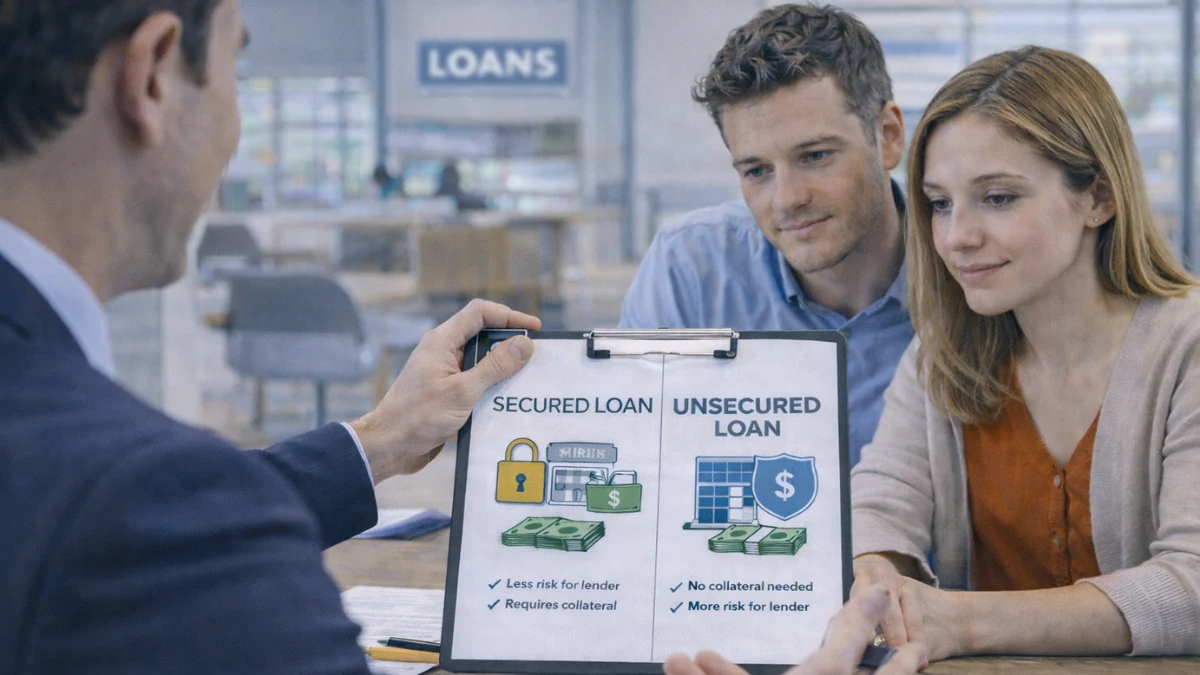
The main difference lies in collateral and risk. Secured loans require assets and offer lower interest rates, while unsecured loans don’t require assets but are more expensive.
Secured loans generally have higher approval chances and larger loan amounts, whereas unsecured loans provide faster access and flexibility. Both options serve different business needs.
Understanding business loan eligibility helps you determine which type of loan you’re more likely to qualify for.
Interest Rates: Which Loan Is More Affordable?
Secured business loans usually come with lower interest rates because the lender’s risk is reduced by collateral.
Unsecured loans, on the other hand, have higher interest rates to compensate for the lack of security.
Over time, this difference can significantly impact your total repayment cost. Even a small rate difference can lead to thousands in extra payments.
Using a business loan calculator helps you compare costs and choose the most affordable option for your business.
Approval Process and Requirements
Secured loans are generally easier to get approved for if you have valuable collateral, as it reassures the lender.
Unsecured loans rely heavily on your credit score, revenue, and business stability, making approval more challenging for some borrowers.
The documentation and verification process may also differ between the two types. Preparing your application properly is essential.
Understanding business loan documents required helps you gather the right paperwork and improve your approval chances.
Risk Factors You Should Consider
Secured loans carry the risk of losing your assets if you default on repayment. This can impact your business operations and financial stability.
Unsecured loans, while safer in terms of asset protection, carry higher financial risk due to higher interest rates and stricter repayment terms. Choosing the wrong type can create long-term problems.
Learning about business loan default consequences helps you understand the risks involved in both options.
Loan Amount and Flexibility
Secured loans usually allow you to borrow larger amounts because they are backed by collateral. This makes them suitable for major investments like expansion or purchasing equipment.
Unsecured loans typically offer smaller amounts but provide faster access and fewer restrictions. They are ideal for short-term needs or working capital.
Understanding business loan repayment helps you choose a loan amount that fits your business capacity.
Which Loan Is Better for Small Businesses?
For small businesses or startups, unsecured loans may be more practical because they don’t require assets.
However, higher interest rates can increase the cost of borrowing.
Established businesses with assets may benefit more from secured loans due to lower rates and higher borrowing limits.
The best choice depends on your financial situation and risk tolerance.
Learning from improve loan approval business strategies helps you choose the right loan type.
When Should You Choose a Secured Loan?
A secured loan is ideal when you need a large loan amount, want lower interest rates, and have assets to pledge as collateral.
It’s best suited for businesses with stable income and long-term investment goals.
However, you must be confident in your repayment ability to avoid losing your assets. Planning carefully ensures you use this option effectively.
When Should You Choose an Unsecured Loan?
An unsecured loan is a good choice if you don’t have collateral or need quick access to funds.
It’s suitable for short-term needs, such as managing cash flow or covering operational expenses.
However, you should be prepared for higher interest rates and stricter eligibility requirements. Evaluating your financial capacity ensures you don’t overextend your business.
Common Mistakes When Choosing Between These Loans
Many business owners choose unsecured loans for convenience without considering higher costs. Others take secured loans without understanding the risk of losing assets.
Not comparing options or ignoring loan terms can also lead to financial stress. It’s important to evaluate both options carefully.
Learning from business loan mistakes to avoid helps you make a smarter decision.
Frequently Asked Questions
Conclusion
Choosing between a secured and unsecured business loan depends on your financial situation, risk tolerance, and business goals.
Secured loans offer lower interest rates and higher borrowing limits but come with the risk of losing assets.
Unsecured loans provide flexibility and quick access but at a higher cost.
By understanding these differences and using tools like a business loan calculator, you can make a smart decision that supports your business growth without unnecessary financial risk.

I create mortgage calculator and loan calculators, along with Guides for Mortgagerateschecker, helping users understand mortgage rates, personal loans, auto loans, student loans, and overall loan affordability. Content is for educational purposes only and not financial advice.