Short vs Long Mortgage: Which One Saves You More Money?
Short mortgages save interest and build equity faster, while long mortgages offer lower monthly payments and flexibility. The best option depends on your budget, goals, and financial stability.
Choosing between a short and long mortgage is one of the most important financial decisions you’ll make as a homebuyer.
While shorter loans can save thousands in interest, longer loans offer lower monthly payments and greater flexibility.
Understanding the trade-offs between these options can help you make a smarter decision based on your income, lifestyle, and long-term financial goals.
Before choosing between short and long-term loans, it’s important to understand average mortgage length and how long borrowers typically keep their loan.
WHAT IS A SHORT VS LONG MORTGAGE
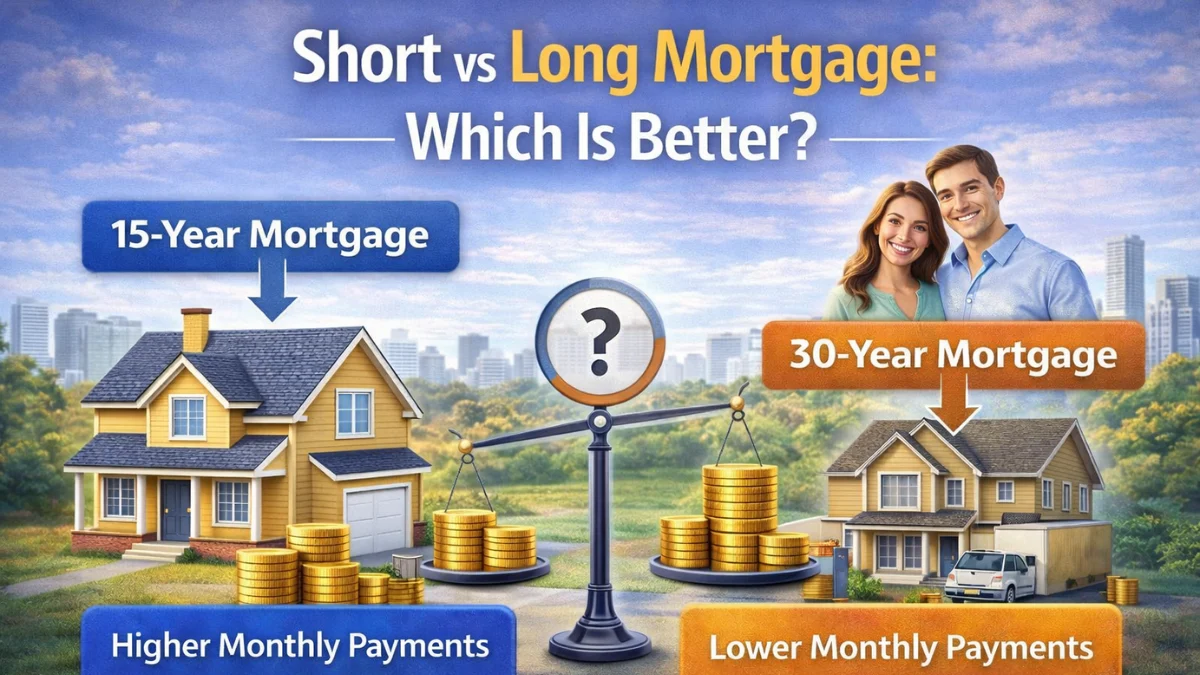
A short mortgage typically refers to a 10- or 15-year loan, while a long mortgage usually means a 20- or 30-year term.
The key difference lies in how quickly you repay the loan and how much interest you pay over time.
Shorter loans require higher monthly payments but reduce the total cost of borrowing. Longer loans spread payments over more years, making them more affordable monthly.
If you’re new, understanding mortgage basics explained simply can help you compare these options more effectively.
KEY DIFFERENCES BETWEEN SHORT AND LONG MORTGAGES
The main difference between short and long mortgages is the balance between affordability and total cost. Short-term loans have higher monthly payments but significantly lower interest over time.
Long-term loans reduce monthly pressure but increase the total amount paid. Another key difference is equity growth—short mortgages help you build equity faster.
These differences are important when comparing loan options and planning your financial future.
MONTHLY PAYMENT COMPARISON
Monthly payments are one of the biggest deciding factors. A 30-year mortgage offers much lower payments compared to a 15-year loan, making it easier for buyers to qualify.
However, the lower payment comes at the cost of higher total interest.
Using a mortgage calculator can help you compare how different loan terms affect your monthly budget and understand the real cost of each option.
TOTAL INTEREST COST DIFFERENCE
One of the biggest advantages of short mortgages is the amount of interest saved. Over time, a 15-year loan can save tens of thousands of dollars compared to a 30-year mortgage.
This is because interest has less time to accumulate. While long mortgages provide affordability, they significantly increase the total cost of the loan.
Understanding this difference is essential for making a financially sound decision.
FLEXIBILITY VS FINANCIAL DISCIPLINE
Long mortgages offer flexibility, allowing borrowers to manage lower payments and adjust their finances as needed.
Short mortgages, on the other hand, require discipline due to higher payments but reward borrowers with faster debt payoff and lower interest.
The choice depends on whether you prefer flexibility or are focused on long-term savings and financial efficiency.
WHICH OPTION IS BETTER FOR FIRST-TIME BUYERS
For first-time buyers, long mortgages are often the preferred choice because they reduce monthly financial pressure.
This makes it easier to manage expenses and qualify for a loan. However, some buyers may choose shorter terms if they have stable income and want to save on interest.
Using a mortgage affordability calculator can help determine which option fits your financial situation best.
WHEN A SHORT MORTGAGE MAKES SENSE
A short mortgage is ideal if you have a strong and stable income, minimal debt, and a goal of paying off your home quickly.
It’s also beneficial if you want to save significantly on interest and build equity faster.
This option is best suited for borrowers who can comfortably handle higher monthly payments without financial strain.
WHEN A LONG MORTGAGE IS A BETTER CHOICE
A long mortgage is better if you want lower monthly payments and more flexibility in your budget.
It’s especially useful for first-time buyers or those with variable income.
Even with a long loan, you can still make extra payments to reduce the term. This makes it a flexible option that can adapt to changing financial situations.
CAN YOU SWITCH BETWEEN SHORT AND LONG MORTGAGES
Yes, borrowers can switch between mortgage terms through refinancing.
Many homeowners start with a 30-year loan and later refinance into a shorter term as their financial situation improves.
This strategy provides both affordability in the beginning and savings in the long run.
Exploring options through how to refinance your mortgage smartly can help you plan this transition effectively.
WHAT SHOULD YOU CHOOSE
The best mortgage length depends on your financial goals, income, and comfort level with monthly payments.
If you prioritize lower monthly costs and flexibility, a long mortgage is a better choice. If you want to minimize interest and pay off your home faster, a short mortgage is ideal.
The key is choosing a loan that aligns with your current situation while allowing room for future adjustments.
Frequently Asked Questions
Conclusion
There’s no universal answer to whether a short or long mortgage is better. Each option offers unique advantages depending on your financial situation and goals.
Short mortgages help you save money and build equity faster, while long mortgages provide affordability and flexibility.
The best choice is one that fits your budget today while supporting your long-term financial plans.
Mortgage Calculator
Recommended Mortgage Tools
Refinance Break-Even Calculator
See how long it takes to recover refinance costs.
Debt-to-Income Ratio Calculator
Check if your income supports mortgage approval.
Refinance Readiness Checker
Find out if now is the right time to refinance.
Mortgage Eligibility Checker
Quickly see if you qualify for a home loan.
First-Time Buyer Readiness
Know if you're ready to buy your first home.
Mortgage Pre-Approval Calculator
Estimate how much you can borrow instantly.
Next Read
Featured Mortgage Insights
Mortgage rates are reshaping how buyers calculate home affordability as borrowing costs directly influence monthly payments and long-term expenses. Buyers are increasingly evaluating realistic budgets and financial stability instead of relying solely on lender approval limits.

Featured Mortgage Insights
Homeownership is often seen as “just paying a mortgage,” but real monthly housing costs go far beyond the loan..

Featured Mortgage Insights
Even with relatively predictable mortgage rates, some buyers are choosing to wait before entering the housing market. Affordability concerns, financial preparedness, and long-term budgeting considerations continue influencing purchasing decisions beyond rate stability alone.


About the Author: Ratiranjan Singha

Don’t Miss These