VA Cash-Out Refinance Rates Today (April 2026): See Current Rates & Equity Options
As of April 2026, VA cash-out refinance rates average around 6.125% for 30-year fixed loans, while jumbo options may be lower near 5.75%. Rates vary daily based on credit, equity, and lender terms, with closing costs typically ranging from 3% to 5%.
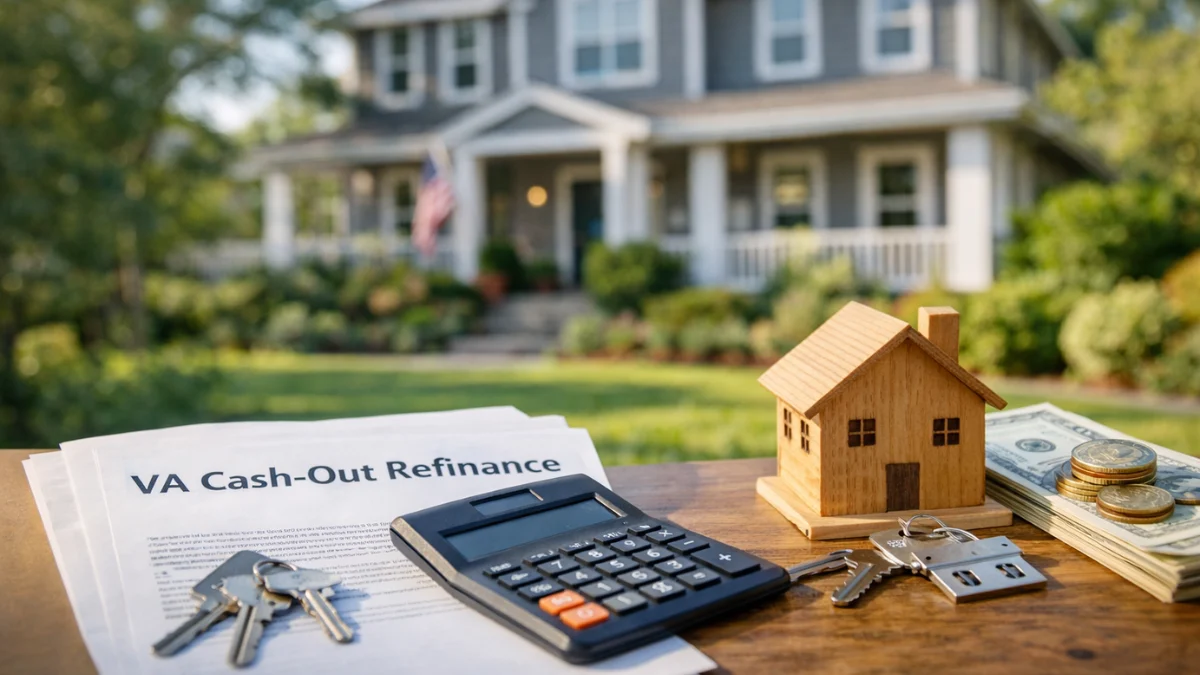
If you’re a veteran or qualifying spouse considering a VA cash-out refinance, knowing VA cash out refinance rates today helps you determine whether tapping into home equity makes financial sense.
These rates typically tied to long-term mortgage pricing but with VA-specific features influence your monthly payment, total interest cost, and overall affordability when you refinance your mortgage for cash.
Understanding today’s rate environment and how it relates to your goals is key to a wise refinance decision.
Typical VA Cash Out Refinance Rates Available Today
VA cash-out refinance rates today are in the low-6% range, offering veterans a flexible way to access home equity.
As of April 1, 2026, 30-year fixed VA cash-out rates average around 6.125%, while jumbo loans can be slightly lower near 5.75%.
These loans allow borrowers to convert equity into cash for debt consolidation or home improvements.
However, rates vary based on credit, lender, and fees, making it essential to compare options before choosing the right refinance solution.
How VA Cash Out Refinance Rates Compare to Other Refinance Paths
VA cash-out refinance rates are typically competitive because VA-backed loans reduce lender risk, similar to VA Streamline Refinance (IRRRL) options. However:
- Cash-out refinance rates may be slightly higher than IRRRL rates because the loan balance increases and there’s more lender risk.
- Rates may also sit slightly above standard purchase VA mortgage rates because refinance pricing reflects loan purpose and market conditions.
Comparing VA refinance options explained helps you understand where cash-out fits relative to other paths.
Factors That Affect Your Personal VA Cash-Out Rate
Your actual VA cash out refinance rate depends on several personal factors:
- Credit score and credit history – higher scores typically result in lower rates.
- Loan-to-value (LTV) – more home equity (lower LTV) can improve pricing.
- Loan term – 15-year terms usually have lower rates than 30-year terms but higher monthly payments.
- Lender pricing – individual lenders adjust rates based on risk and competition.
Because these factors vary by individual, the rate you qualify for can differ from published averages.
How Broader Mortgage Market Trends Influence VA Cash-Out Rates
VA cash-out refinance rates move with broader mortgage market trends. For example, recent data show national long-term rates near multi-year lows, with the average U.S. 30-year fixed mortgage around 6.06%, down from earlier highs.
Lower general mortgage rates often translate into more competitive VA refinance pricing, though VA loans remain priced based on lender risk models tied to government guarantees.
Rate Lock Timing and VA Cash-Out Refinance
Because mortgage and refinance rates can shift daily, many lenders offer a rate lock once you choose a loan term and submit your application.
A rate lock protects your pricing while your loan processes, but longer locks can come with slightly higher cost.
Understanding how mortgage rates work helps you pick the right timing to lock in your VA cash-out refinance rate and avoid market swings affecting your offer.
How to Get Better VA Cash-Out Refinance Rates
To improve your chances of securing competitive VA cash-out refinance rates:
- Compare multiple VA refinance quotes from different lenders.
- Improve your credit score before applying.
- Build more home equity to lower loan-to-value.
- Consider points vs. interest trade-offs (buying points can reduce your rate).
A thoughtful approach increases the likelihood you qualify for a rate that genuinely strengthens your financial position.
Conclusion
Today’s average VA cash-out refinance rates give you a starting point for planning your refinance strategy, with typical 30-year VA refinance pricing near the mid-6% range and some advertised cash-out options closer to 5.99%.
However, every borrower’s rate is unique. Comparing personalized VA refinance quotes and considering your credit profile, equity, and goals will reveal what you can actually qualify for and whether a VA cash-out refinance is the right choice for you.
Focus on real offers rather than averages to make a decision that strengthens both your mortgage and your financial future.
Mortgage Calculator
Recommended Mortgage Tools
Refinance Break-Even Calculator
See how long it takes to recover refinance costs.
Debt-to-Income Ratio Calculator
Check if your income supports mortgage approval.
Refinance Readiness Checker
Find out if now is the right time to refinance.
Mortgage Eligibility Checker
Quickly see if you qualify for a home loan.
First-Time Buyer Readiness
Know if you're ready to buy your first home.
Mortgage Pre-Approval Calculator
Estimate how much you can borrow instantly.
Next Read
Featured Mortgage Insights
Home loans are increasingly influencing the types of properties buyers choose across housing markets. Mortgage affordability, interest rates, and long-term payment considerations are pushing buyers to adjust expectations and select homes that better align with financial stability.

Featured Mortgage Insights
Most home loans last 15 to 30 years, but your loan term directly impacts your interest rate and monthly payments. Shorter terms usually offer lower rates and faster payoff, while longer terms provide flexibility and lower monthly costs.

Featured Mortgage Insights
Mortgage forbearance is a relief option many homeowners overlook until financial pressure becomes difficult to manage. During temporary hardship, mortgage forbearance may allow borrowers to pause or reduce payments for a limited time, helping them stabilize their finances while avoiding missed mortgage payments.


About the Author: Ratiranjan Singha

Don’t Miss These