15 Year Refinance Rates: Is It Worth Switching?
Deciding whether to switch to a 15-year refinance rate isn’t just about getting a lower interest rate, it’s about..

Deciding whether to switch to a 15-year refinance rate isn’t just about getting a lower interest rate, it’s about evaluating your financial goals, monthly budget, and long-term savings.
A 15-year refinance often offers significantly lower interest rates than longer terms like 30-year loans, but it also comes with higher monthly payments.
Understanding the real benefits and trade-offs of switching helps you determine if this move truly fits your situation not just what the rate looks like on paper.
What a 15-Year Refinance Rate Offers
A 15-year refinance rate typically comes with a lower interest rate than longer mortgage terms because the loan is repaid faster, reducing risk for lenders.
This lower rate can result in significantly less total interest paid over the life of the loan.
However, that benefit must be balanced against the higher monthly payment that comes from compressing the same balance into a shorter timeframe.
Total Interest Savings: Long-Term Payoff
Switching to a 15-year refinance can save tens of thousands in interest cost over the life of the loan.
Because you’re paying down the principal faster, your outstanding balance shrinks quickly, which reduces interest accrual.
Many homeowners use a refinance calculator to quantify this benefit, comparing total interest paid in a 15-year scenario versus their existing loan.
Higher Monthly Payments: Monthly Budget Impact
The most obvious downside to switching to a 15-year refinance rate is the increased monthly payment.
Even at a lower rate, your monthly cash outlay is higher than with a longer term.
It’s essential to evaluate whether your monthly budget can support this payment comfortably without sacrificing savings, emergency funds, or other goals.
Break-Even Timing: Costs vs Savings
Refinancing comes with closing costs, which must be recovered through monthly savings and interest reduction.
Calculating your break-even point, the time it takes for savings to cover those costs is critical to decide if switching is worth it.
If you plan to sell or refinance again before that point, a 15-year refinance might not be the optimal move.
When Switching Makes the Most Sense
A 15-year refinance rate is often worth it when:
- You plan to stay in the home long term
- You can afford the higher monthly payment
- Your current mortgage rate is significantly higher
- Lower total interest aligns with your financial priorities
In these cases, the switch can strengthen your financial position and accelerate equity building.
When a 15-Year Refinance Might Not Be Worth It
Switching may not be worth it if:
- The higher payment strains your budget
- You’re close to selling or moving
- You need cash flow for other priorities
- Closing costs outweigh potential savings
In such cases, a longer refinance option or rate-and-term structure may be a better fit.
How Your Personal Profile Affects Your Refinance Rate
Your credit score, equity level, and income stability influence the actual 15-year refinance rate you qualify for.
Stronger profiles typically receive better pricing, while weaker profiles may see less dramatic rate differences.
Reviewing what lenders look at for refinance approval before applying helps you estimate realistic rate outcomes.
Comparing 15-Year Refinance With Other Structures
The choice isn’t just between your current loan and a 15-year refinance, it also includes:
- 30-year refinance (lower monthly payment, more interest)
- Cash-out refinance (access equity, higher rate)
- Rate-and-term refinance (change terms without pulling equity)
Understanding mortgage refinance options helps you see where a 15-year path fits into the broader spectrum of strategies.
How Market Conditions Influence 15-Year Rates
Broader economic factors like inflation expectations, bond yields, and Federal Reserve policy shape refinance rate environments.
Monitoring current refinance rates over time helps you judge whether today’s pricing is favorable for switching to a 15-year structure or whether waiting may bring better opportunities.
Conclusion
Switching to a 15-year refinance rate can deliver meaningful long-term savings and faster equity buildup, but only if it fits your financial reality.
The smartest decisions come from comparing total interest savings, monthly payment impact, and break-even timing against your personal goals and stability.
Mortgage Calculator
Recommended Mortgage Tools
Refinance Break-Even Calculator
See how long it takes to recover refinance costs.
Debt-to-Income Ratio Calculator
Check if your income supports mortgage approval.
Refinance Readiness Checker
Find out if now is the right time to refinance.
Mortgage Eligibility Checker
Quickly see if you qualify for a home loan.
First-Time Buyer Readiness
Know if you're ready to buy your first home.
Mortgage Pre-Approval Calculator
Estimate how much you can borrow instantly.
Next Read
Featured Mortgage Insights
The average mortgage length for first-time buyers is usually 30 years, but most don’t keep the loan that long. Many refinance or move within 10 to 12 years.

Featured Mortgage Insights
Most people don’t keep their 30-year mortgage. On average, homeowners stay in a loan for about 10 to 12 years due to refinancing, moving, or upgrading homes.
Featured Mortgage Insights
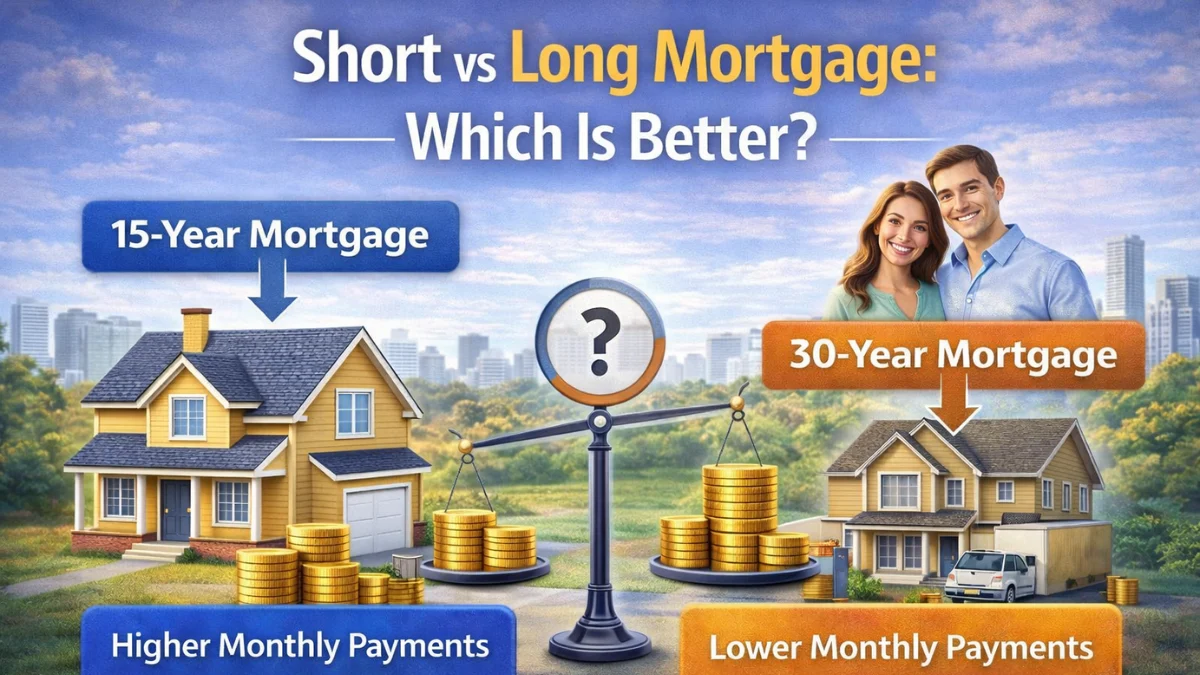
Short mortgages save interest and build equity faster, while long mortgages offer lower monthly payments and flexibility. The best option depends on your budget, goals, and financial stability.


About the Author: Ratiranjan Singha

Don’t Miss These

Home Loans Explained: Types, Rates & How They Work

Refinancing Your Mortgage: Rates, Costs & Smart Tips