
Home equity is one of the most powerful financial benefits of homeownership, but it’s also one of the most misunderstood.
Many homeowners assume equity is “free money” or something they can access anytime without consequences.
In reality, equity works like a financial tool that can build wealth when used wisely, but can create long-term risk when misunderstood.
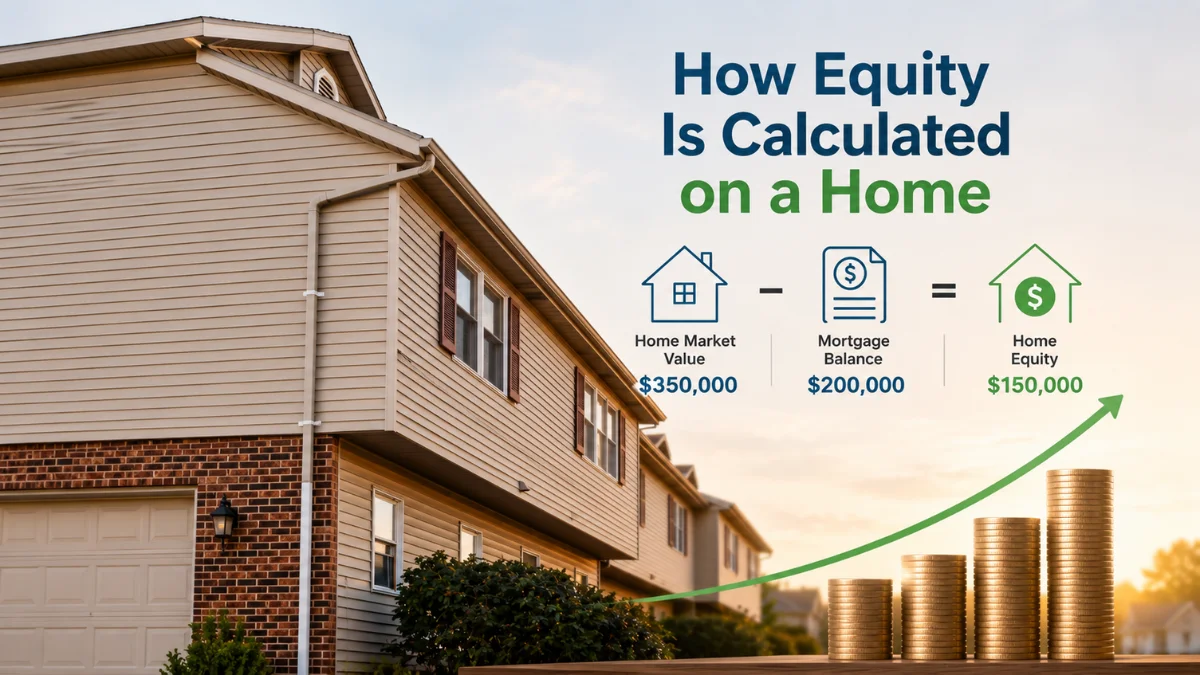
Home equity is simply the difference between your home’s market value and your mortgage balance.
Many homeowners confuse equity with cash, but equity is not liquid. It becomes usable only through selling, refinancing, or borrowing against it.
Understanding this prevents financial mistakes and helps you build long-term wealth safely.
Home Equity Is Not the Same as Cash in Your Bank Account
One of the biggest misunderstandings is believing home equity is the same as money you can freely spend. Equity is real value, but it is locked inside the property.
Until you sell the home or borrow against it, you cannot access that money. This is why some homeowners feel “wealthy” on paper but still struggle with cash flow.
To access equity, you usually need a loan product like a refinance, HELOC, or home equity loan. That means you’re taking on debt, not withdrawing savings.
Many homeowners mistakenly treat equity like income, which can lead to financial stress.
If you’re trying to estimate your equity growth over time, using an estimated mortgage calculator helps show how your loan balance drops and how equity builds gradually.
Equity Growth Does Not Always Mean You’re Making a Profit
Many homeowners assume that if their home value increases, they automatically profit. But true profit only happens when you sell and subtract all costs.
These costs include realtor commissions, closing costs, repairs, moving expenses, and sometimes capital gains taxes depending on the situation.
In some cases, homeowners sell for more than they bought but still walk away with less than expected.
Another issue is that appreciation is not guaranteed. Home prices can drop due to market cycles, interest rate changes, or neighborhood decline.
This is why understanding market timing matters. Keeping an eye on mortgage rates today is useful because rates heavily influence housing demand and home values.
Equity can create wealth, but only when homeowners understand the full financial picture.
What To Read Next



Paying a Mortgage Doesn’t Build Equity Quickly in the Early Years
A common misunderstanding is believing equity builds fast as soon as you start paying your mortgage.
In reality, early mortgage payments go mostly toward interest, not principal. This is especially true for 30-year mortgages, where the first 5-7 years may feel like the balance barely changes.
This slow early progress can surprise first-time homeowners.
Many think they will build large equity quickly, but amortization works differently. Equity growth speeds up later in the loan when more of each payment goes toward principal.
To visualize this, an amortization calculator is extremely helpful because it breaks down how your balance changes each year.
Knowing this can also prevent homeowners from selling too early and losing money.
Home Equity Loans and HELOCs Are Not “Free Money”
Many homeowners believe borrowing against equity is harmless because “it’s my own money.”
But borrowing against equity is still debt. If you take a HELOC or equity loan, you must repay it with interest. If you fail to repay, you risk foreclosure because your home is the collateral.
This misunderstanding leads to homeowners using equity for vacations, lifestyle spending, or unnecessary purchases. Equity borrowing should be treated like any other major financial decision.
If you’re considering borrowing through refinancing instead, learning about home equity refinance options can help you compare the risks.
Equity is powerful, but it should be used strategically, preferably for investments, debt consolidation, or home improvements that increase value.
Cash-Out Refinance Can Reduce Wealth If Used Incorrectly
A cash-out refinance is one of the most popular ways to access equity, but many homeowners misunderstand how it affects long-term wealth.
When you cash out, you are replacing your old mortgage with a larger one. That means your loan balance increases, and your interest costs may rise significantly, especially if current rates are higher.
Some homeowners cash out equity thinking they’re “taking profits,” but they may end up paying interest for 20–30 years on the money they withdrew.
If used wisely, cash-out refinancing can be helpful, but it can also destroy equity if used for non-essential spending.
Comparing cash-out refinance rates and understanding long-term repayment impact is essential before choosing this strategy. For clarity, using a refinance calculator helps estimate how your new payment will change.
Home Improvements Don’t Always Increase Equity as Much as People Think
Another major misunderstanding is believing every home improvement automatically increases property value.
While upgrades can improve resale appeal, not all renovations add equal value.
Some homeowners spend $50,000 on remodeling but only increase the home’s value by $20,000. This results in less equity, not more.
The best upgrades tend to be practical and market-driven, such as kitchen improvements, bathroom updates, energy efficiency upgrades, and necessary repairs.
Cosmetic upgrades that are too personalized may not return value.
Many homeowners refinance to fund renovations, which is why understanding refinancing for home improvements is important.
Improvements can build equity, but only when they increase value more than they cost.
Equity Can Shrink If Home Values Drop or Debt Increases
Homeowners often assume equity always grows. But equity can shrink if your home value drops, your loan balance increases, or you borrow against the property.
Market downturns can reduce home values quickly, and homeowners who took cash-out loans may end up owing more than the home is worth. This is known as being underwater.
This is why home equity should be managed carefully. Borrowing too aggressively can turn homeownership into long-term risk instead of stability.
Understanding refinance terms and comparing mortgage refinance options helps homeowners avoid risky decisions.
Equity is not guaranteed growth, it’s a balance between property value and debt. Protecting that balance is what builds long-term wealth.
Frequently Asked Questions
Conclusion
Home equity is one of the biggest advantages of homeownership, but it is often misunderstood.
Many homeowners confuse equity with cash, assume appreciation is guaranteed, or think borrowing against equity has no consequences.
The truth is that equity is real value, but accessing it involves debt, costs, and long-term responsibility. Understanding how equity works helps homeowners avoid mistakes and build wealth safely over time.
For smarter mortgage planning, equity strategies, refinancing guidance, and helpful tools, visit Mortgage Rates Checker and make confident homeownership decisions backed by real numbers.