
Building home equity is one of the biggest reasons people choose homeownership over renting.
But many first-time buyers assume equity grows quickly, and they’re surprised when their mortgage balance barely changes in the early years.
The truth is that equity takes time, and how fast it grows depends on your loan type, home value appreciation, and how aggressively you pay down the mortgage.
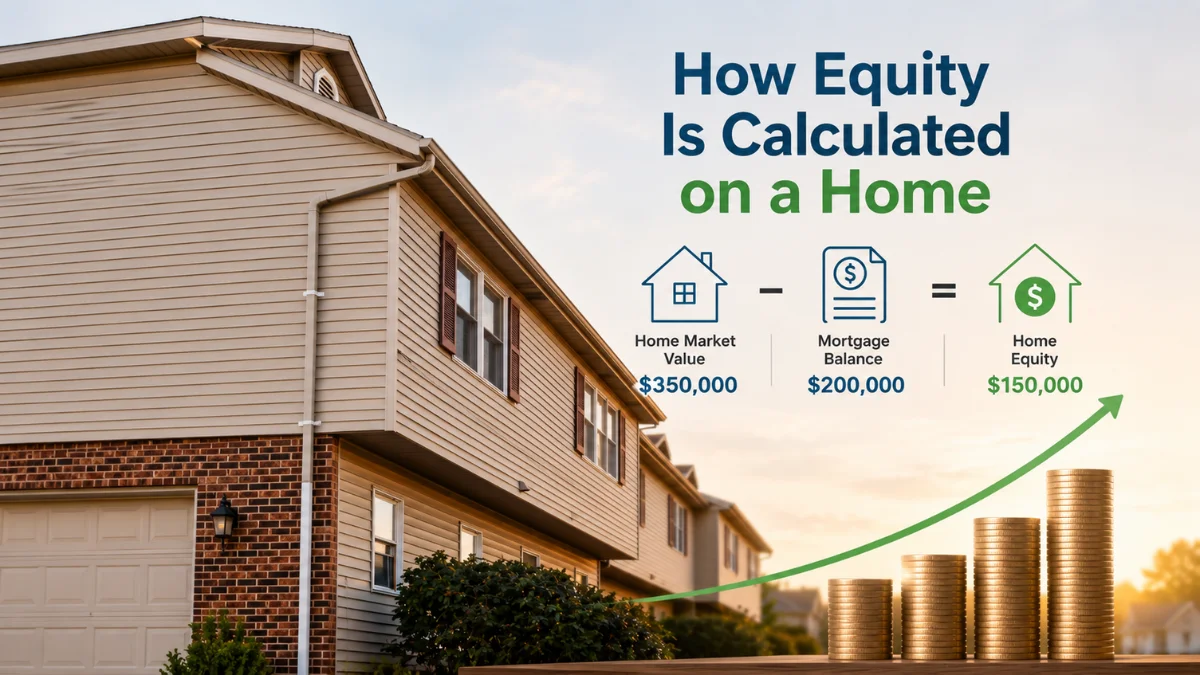
Home equity grows in two ways: your mortgage balance decreases as you pay principal, and your home’s value may increase over time.
Early mortgage payments mostly go toward interest, so equity grows slowly at first. Later in the loan, principal payoff speeds up, and equity growth becomes much faster.
The First 1-3 Years: Equity Builds Slowly for Most Homeowners
In the first few years of homeownership, equity growth is usually slow. This happens because mortgage loans are structured with amortization, meaning interest is front-loaded.
In the beginning, a large part of your monthly payment goes toward interest rather than reducing the principal balance.
So even though you’re paying every month, the loan balance may not drop as much as you expect.
For most buyers, the only equity they have early on is their down payment. If you bought with 3% to 5% down, your equity is limited, and closing costs may offset early gains.
This is why many homeowners don’t feel wealthier right away.
To understand this timeline clearly, using an amortization calculator can show how much principal is paid each year and when your payoff begins accelerating.
The 3-5 Year Mark: Equity Becomes Noticeable for Many Buyers
Between year three and year five, most homeowners start seeing equity grow more noticeably.
At this stage, your loan balance has reduced enough that slightly more of your payment goes toward principal.
In addition, if your home’s value has increased even modestly, your equity can rise faster than expected.
This is often the point where homeowners feel they have financial progress and stability.
Many people also consider refinancing around this time, especially if rates drop or their credit improves.
Checking mortgage refinance rates and comparing current refinance rates can help determine if refinancing would strengthen your equity growth.
If you plan to stay long-term, this period is often when homeownership begins to show real wealth-building benefits.
What To Read Next



The 7-10 Year Window: Equity Growth Accelerates Rapidly
For many homeowners, the biggest equity jump happens after 7 to 10 years. This is because amortization begins shifting heavily toward principal payments.
Interest takes up less of the monthly payment, and the loan balance drops faster each year. At the same time, property appreciation over a decade can significantly boost home value.
This is why experts often recommend staying in a home at least 7 years if possible. It gives you time to recover your buying and selling costs and benefit from stronger equity growth.
If you’re planning your timeline, using a mortgage calculator can help you estimate your balance after 10 years.
This is also the stage when homeowners have enough equity to upgrade, invest, or refinance strategically.
Home Appreciation Can Speed Up Equity Faster Than Payments Alone
Many homeowners build equity faster not because they pay down the loan quickly, but because their home value increases. Even a 3% yearly appreciation can create significant equity growth over time.
For example, a home purchased for $300,000 could be worth much more after 5-10 years, increasing your equity even if your mortgage balance hasn’t dropped dramatically.
However, appreciation is not guaranteed. Market conditions, interest rates, and local demand all affect price growth.
This is why tracking mortgage rates today is important because rates strongly influence homebuyer demand and home values.
Appreciation can be a powerful wealth builder, but homeowners should avoid depending on it completely.
The strongest equity growth happens when appreciation and principal payoff work together.
Extra Payments Can Cut Years Off and Build Equity Faster
One of the best ways to build equity faster is making extra mortgage payments. Even small extra payments applied directly to principal can reduce the loan balance much faster and lower total interest paid.
This strategy is especially powerful in the first few years when interest charges are highest.
Some homeowners pay biweekly instead of monthly, while others apply tax refunds or bonuses toward principal. These actions can cut years off a mortgage and build equity dramatically faster.
To see the real impact, using a mortgage calculator with extra payments can show how much faster your equity grows and how much interest you save.
For long-term homeowners, extra payments are one of the simplest and safest wealth-building strategies.
Refinancing Can Increase Equity Growth if Done at the Right Time
Refinancing can help build equity faster if it lowers your interest rate or shortens your loan term. A lower rate reduces the interest portion of your payment, allowing more money to go toward principal.
Refinancing into a shorter loan term, like 15 years, can also speed up equity growth significantly.
However, refinancing can also slow equity growth if you restart a 30-year mortgage and extend your payoff timeline. That’s why homeowners should calculate the break-even point before refinancing.
Tools like the refinance break-even calculator can help determine whether refinancing will actually improve your financial position.
Refinancing can be a wealth tool, but only when it aligns with your long-term plan and expected time in the home.
Down Payment Size Impacts How Fast You Start With Equity
Your down payment plays a huge role in how quickly you build equity.
A buyer who puts down 20% starts with instant equity, while someone who puts down 3% has much less ownership in the home at the start.
This matters because small down payments often require PMI, which increases monthly cost without building equity.
However, low down payment loans still allow homeowners to build equity over time, especially if home values rise.
Many first-time buyers focus on affordability rather than a large down payment, which is often a smart choice.
To plan this properly, using a down payment calculator helps estimate how much equity you’ll have immediately after purchase and how it affects monthly payments.
Frequently Asked Questions
Conclusion
Home equity usually builds slowly in the first few years, becomes noticeable around 3-5 years, and accelerates strongly after 7-10 years.
Equity growth depends on amortization, home appreciation, your down payment, refinancing decisions, and whether you make extra payments.
The longer you stay in your home and manage your mortgage wisely, the more powerful equity becomes as a long-term wealth-building tool.
To calculate your equity timeline, explore refinancing options, and plan your mortgage strategy, visit Mortgage Rates Checker for trusted tools and guidance built for smart homeowners.